

A single fly near the pass or a few flies around the bin room can look like a small problem on a busy service night. For a restaurant in Abu Dhabi, it can turn into a failed inspection. When the Abu Dhabi Agriculture and Food Safety Authority (ADAFSA) reported that it had closed 69 food outlets in 18 months, Gulf News noted that the presence of insects in food preparation areas was one of the most common offences.
This guide shows where flies breed in a commercial kitchen, what inspectors focus on, and the daily habits that keep flies away. If you already have a fly problem, see our fly control for restaurants and homes in Abu Dhabi.
Key Points
- Insects in food preparation areas are one of the most common reasons ADAFSA takes action against food outlets.
- Most kitchen flies breed in drains, grease traps, bin rooms and wet food left under equipment.
- Spraying the flies you can see does not fix the problem. Cleaning the breeding spots does.
- A regular pest control service with written reports helps you stay ready for any inspection.
In This Guide
Where Flies Breed in a Commercial Kitchen
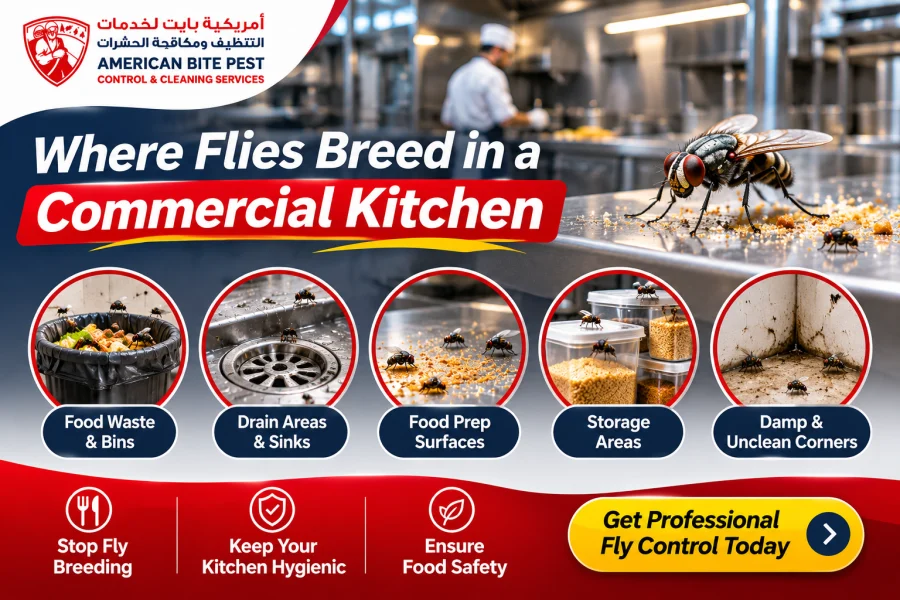
Flies lay their eggs where there is wet, rotting food or a slimy film. A busy kitchen has many of these spots, and most of them are out of sight. Check these four places first.
1. Floor drains and grease traps
Food scraps, fat and soap wash into floor drains all day. Over time a film builds up inside the pipe, below the grate where nobody looks. Small flies such as drain flies breed in that film. Grease traps that are not emptied often enough can do the same. Our guide on why drain flies keep coming back explains how this film works and how to scrub it out.
2. Bin rooms and waste compactors
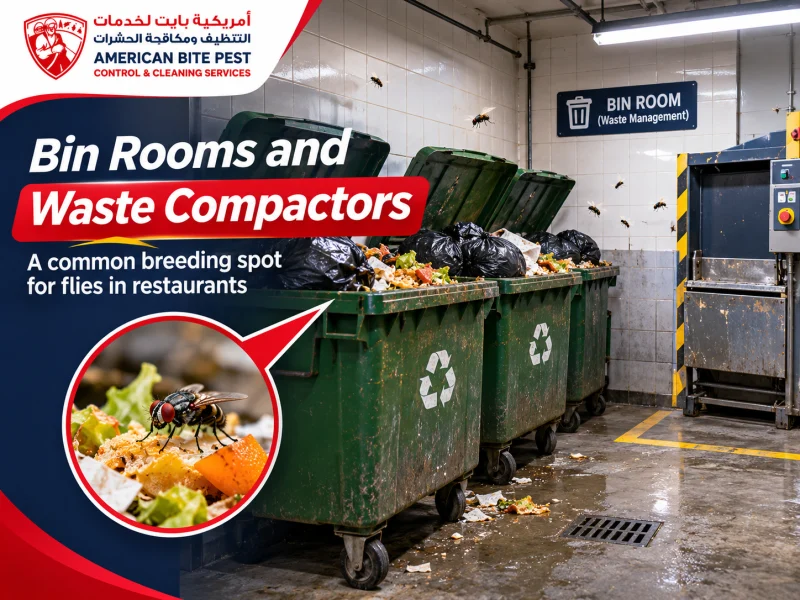
Open bins, torn bags and liquid at the bottom of a bin are ideal for house flies. In the heat, waste starts to smell quickly, and the smell pulls flies in from outside. A bin room that is washed only now and then becomes a breeding site.
3. Under and behind equipment
Rice, onion skins and sauce fall under fryers, fridges and prep tables and stay there. When this food stays wet, flies can breed in it. These gaps are often missed in the nightly clean because the equipment is heavy to move.
4. Back doors left open
A back door left open for deliveries or for air lets flies walk straight in. Once inside, they look for the places above. Keeping doors shut is one of the cheapest fixes you can make.
What Inspectors Focus On
The same ADAFSA report listed the most frequent problems found in food outlets. Besides insects in food preparation areas and expired products, they included:
- Food preparation surfaces that are not clean
- Poor general sanitation
- Perishable food stored or displayed the wrong way
- Staff who have not had the required food safety training
Notice how closely these link to flies. Dirty surfaces, poor sanitation and food left out are exactly what feed and attract flies. A kitchen that fixes these points usually has far fewer flies too.
Food outlets in Abu Dhabi also show a Zadna rating sticker that reflects their latest inspection result, so customers can see how well a kitchen follows food safety rules. A pest problem can affect that result.
Daily and Weekly Routines That Stop Flies
Fly control in a kitchen is mostly about habits. These routines remove the places where flies breed and feed.
Every Day
- Keep bin lids closed and tie bags before they are full, so no liquid leaks out.
- Clean under equipment at closing time, not just the surfaces you can see.
- Keep doors shut between deliveries, and use strip curtains or an air curtain on doors that open often.
- Cover food during prep and after service.
Every Week
- Brush inside floor drains with a long drain brush to remove the film, then flush with hot water.
- Wash the bin room and the bins themselves, including the bottom.
- Move equipment where you can and clean behind it.
- Check door seals and screens for gaps and tears.
Tip: ask your grease trap service provider how often your trap should be emptied for your volume of cooking, and keep to that schedule.
Fly Lights: How They Help and Where to Put Them
Fly lights, also called UV light traps, draw flying insects to a light and catch them on a glue board. They are useful for catching flies that get in, and the glue board also shows you how many flies you have and when the number goes up.
Where you put them matters:
- Keep them away from open food and food preparation surfaces.
- Do not place them where they can be seen from outside, such as facing an open door or window, or they may draw more flies in.
- Place them near entry points, so flies are caught before they reach the kitchen.
- Change glue boards and tubes on schedule, because old tubes give off less UV light.
Remember that fly lights only catch adults. If flies are breeding in a drain, the light will keep catching new ones until the drain is cleaned.
What a Pest Control Contract Should Give You
A one time spray rarely solves a kitchen fly problem, because new flies keep breeding. A regular service is a better fit for food businesses. Before you sign, check that the contract gives you:
- Scheduled visits at times that do not disturb service.
- A written report after every visit, showing what was found, what was treated and what you need to fix.
- Products that are suitable for food areas, applied by trained technicians.
- Extra visits when you see more flies between scheduled visits.
Keep every service report in one file at the restaurant, so you can show what was done and when if an inspector asks. To compare options, read annual pest control contract or one time treatment. Before each visit, our checklist on how to prepare restaurants before pest control will save time.
How We Help Restaurants in Abu Dhabi
We start with a free inspection of the kitchen, drains, grease trap area, bin room and doors to find where the flies come from. Then we treat the breeding spots, set up fly control that suits a food area and give you a written report. For a full programme that also covers cockroaches and rodents, see our restaurant pest control in Abu Dhabi service.
Frequently Asked Questions
How often should a restaurant have pest control?
It depends on the size of the kitchen, the type of food and any pest activity. Most food businesses use a regular service rather than one visit, with the schedule set after an inspection and extra visits when activity goes up.
Are fly sprays safe to use in a restaurant kitchen?
Household fly sprays should not be used over food or food contact surfaces. In a food business, any treatment should use products suitable for food areas, applied by a trained technician who follows the label and covers or removes food first.
Why do flies keep coming back after we clean?
Usually because the breeding spot was missed. Flies often breed inside drains, grease traps, bin rooms or under equipment. Cleaning surfaces removes the adults’ food but not the eggs and larvae. Find and clean the breeding spot to stop the cycle.
Seeing Flies in Your Kitchen?
Send us a photo and we will book a free inspection at a time that does not disturb your service.