
Preparing a restaurant for pest control generally means removing or protecting exposed food, securing ingredients, clearing accessible treatment areas, and making pest-prone spots reachable for inspection. It also means telling staff what to expect and following the specific instructions given by the pest-control provider for that visit.
No single preparation checklist works for every restaurant treatment. A cockroach gel application, a rodent inspection, and a fly-control service each call for different steps, and the products and methods used will shape what needs to happen before the technician arrives. This guide walks through the practical preparation process step by step, from food and equipment to storage, staff, closure questions, and what happens after treatment. Provider-specific instructions always take priority over general guidance like this.
Restaurant Pest Control Preparation Checklist
Before getting into the details of food, kitchen, and storage prep, it helps to have a quick overview of what most restaurant treatments require in some form. Not every item applies to every visit, so treat this as a starting point rather than a fixed rulebook.
- Remove or protect exposed food
- Seal or store ingredients properly
- Clear accessible areas scheduled for treatment
- Protect food-contact items as instructed
- Clean up visible food debris
- Address accessible waste
- Clear areas under sinks and counters where reachable
- Make pest-prone areas accessible for inspection
- Inform employees about the visit and affected areas
- Confirm exactly which areas will be treated
- Follow the provider’s specific preparation instructions
Depending on the treatment method, a technician may only need two or three of these steps done, or they may ask for a fuller kitchen clearance. Always confirm with the provider ahead of time.
What Should You Do With Food Before Pest Control?
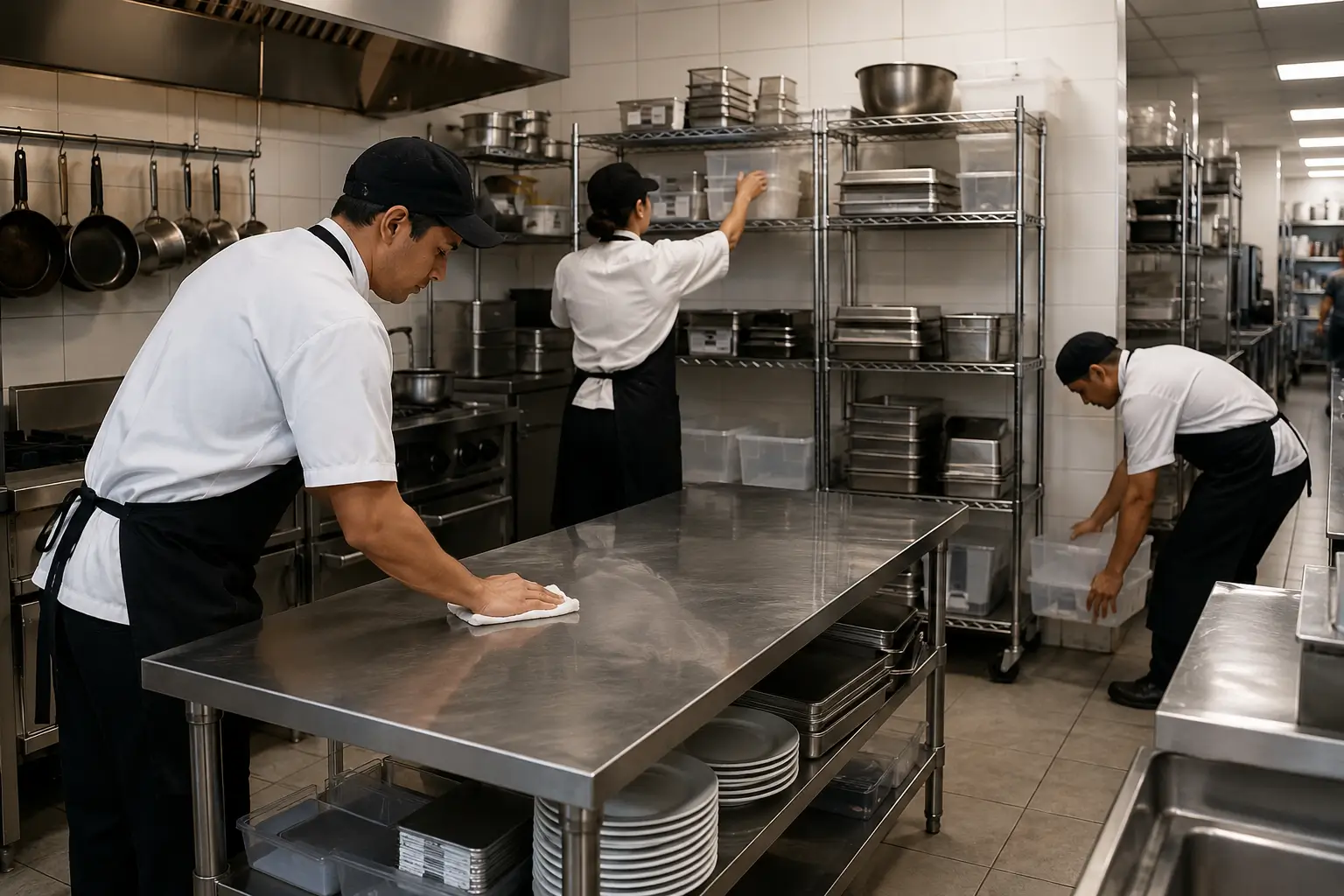
Exposed food should generally be removed from any area scheduled for treatment, while stored ingredients should be sealed or protected according to the provider’s instructions. Exposed food should be removed from treatment areas because it may be contaminated or otherwise unsuitable for use after treatment. Follow the provider’s instructions for food, ingredients and food-contact items before the treatment begins.
Remove Exposed Food
Exposed food means anything sitting out on prep counters, in open containers, or on shelves without a lid or wrapper. This includes half-used sauces, uncovered bread, garnishes left in bins, and any item a technician could accidentally brush against while working. Move these items into sealed storage or a refrigerator outside the treatment zone before the visit begins.
Store Ingredients Properly
Dry ingredients such as flour, rice and spices should be stored in sealed containers where practical. Any food or ingredients within the treatment area should be handled according to the provider’s preparation instructions. Produce and prepared food should be refrigerated or covered if it isn’t already. Refrigerated ingredients generally don’t need special handling beyond making sure the fridge itself is out of the direct treatment path, unless the provider says otherwise.
Protect Food-Contact Surfaces
Prep counters, cutting boards, utensils, and food-preparation equipment sit at the center of daily kitchen work, which is exactly why they need attention before treatment. Cover or move these items if they’re inside the treatment zone, and always follow the provider’s instructions about which surfaces need cleaning afterward before they’re used again.
How to Prepare the Commercial Kitchen
Commercial kitchens contain equipment, plumbing, storage and service gaps that can make pest inspection and treatment more difficult. Getting the kitchen ready means opening up those spaces rather than just tidying countertops.
Clear Areas Under Counters and Sinks
Spaces under sinks and counters often collect moisture, food residue, and plumbing penetrations, which makes them common pest harborage points. Clearing stored items from these areas gives the technician a clear view of where pests may be entering or nesting, and it’s usually one of the most useful things a kitchen team can do before a visit.
Clean Accessible Food Debris
Crumbs, spills, and grease residue on floors and shelves are part of normal kitchen hygiene, and addressing them before a pest-control visit is good practice regardless of what treatment is planned. That said, cleaning alone doesn’t resolve an active infestation. It simply removes an easy food source and helps the technician see the areas that actually need treatment.
Make Equipment Areas Accessible
Refrigeration units, cooking equipment, shelving, and cabinets often sit against walls where pests travel. Pulling small, movable items away from these areas, where safe to do so, gives technicians better access. Do not move heavy or fixed equipment yourself unless the pest-control provider specifically instructs you to do so or appropriate assistance is available.
Also Read > What Are Good Pest Control Companies in Abu Dhabi for Cockroaches?
How to Prepare Restaurant Storage Areas
Dry storage rooms, ingredient shelves, and packaging areas deserve the same attention as the kitchen line, since they’re just as likely to hold pest activity. Organize shelves so cardboard and packaging aren’t stacked directly against walls, and check floor-level storage and low-traffic corners for any signs of pest activity, such as droppings, gnaw marks, or shed insect casings.
Accessible storage areas help technicians inspect potential harborage points and entry points more thoroughly. If a shelf or bin hasn’t been moved in months, it’s worth checking before the visit rather than during it.
What Should Be Cleaned Before Restaurant Pest Control?
Food debris, accessible surfaces, and waste areas should generally be cleaned before a visit, but treated areas should not be cleaned again immediately afterward unless the provider confirms it’s safe to do so. Cleaning at the wrong time can either leave a mess for the technician to work around or interfere with a treatment that’s just been applied.
Food Debris
Wipe down counters, sweep floors, and clear crumbs from shelves before the appointment. This is standard kitchen upkeep and helps the technician focus on pest activity instead of general mess.
Waste Areas
Waste bins and disposal areas should follow your restaurant’s normal cleaning schedule. If the provider is treating near waste areas specifically, ask whether any extra steps are needed before they arrive.
Accessible Surfaces
Countertops, shelving, and floors in non-treatment zones can be cleaned as usual. There’s no need to change your regular routine outside the areas being treated.
Areas That Should NOT Be Cleaned Immediately After Treatment
Do not wash or clean treated areas until the pest-control provider confirms that cleaning is appropriate. Some treatments can be affected by cleaning too soon after application.
How Should Restaurant Employees Prepare for Pest Control?
Employees should be told in advance which areas will be treated, when the visit is happening, and whether they need to stay clear of certain zones. This matters even more in restaurants running multiple shifts, since the team on site during treatment may not be the same one that scheduled it.
Practical steps for staff preparation include:
- Informing kitchen staff and shift managers about the appointment
- Identifying which areas are being treated so no one walks into them unexpectedly
- Keeping non-essential personnel away from treatment zones
- Removing personal belongings from treatment areas where instructed
- Following the provider’s preparation instructions for their specific role
- Following re-entry instructions once treatment is finished
A short briefing at the start of a shift, or a note posted near the kitchen entrance, is usually enough to keep everyone informed.
What Should Happen to Restaurant Equipment Before Treatment?
Whether kitchen equipment can remain in place or operating depends on the treatment area and method. Follow the provider’s instructions for equipment that falls within or near the treatment zone.
Food Preparation Equipment
Mixers, slicers, and other prep equipment should be covered or moved out of the treatment zone if they’re in the way. Otherwise, they can generally stay where they are.
Refrigerators and Freezers
Keep refrigeration equipment operating unless the pest-control provider specifically instructs otherwise. Unplugging a fridge or freezer without reason risks food safety issues that have nothing to do with pest control.
Cooking Equipment
Ovens, fryers, and stovetops usually just need the surrounding floor and counter space cleared so the technician can access nearby walls, gaps, and equipment bases.
Small Appliances
Toasters, coffee machines, and other countertop appliances only need to move if they sit within the treatment area. If they’re outside the treated zone, they can generally stay put.
Heavy or Fixed Equipment
Walk-in coolers, large ovens, and bolted-down equipment should not be moved by staff. Leave this to the provider’s team or arrange proper assistance in advance if access behind or under this equipment is needed.
Does a Restaurant Need to Close for Pest Control?
Whether a restaurant needs to close depends on the pest, treatment method, areas being treated, product instructions, and the pest-control provider’s requirements. Some visits can happen with the restaurant fully open, while others require closing part or all of the space.
Common scenarios include:
- Full closure — used for larger treatments or when products require an empty space for safety
- Partial-area treatment — only one section (like a storage room or specific kitchen zone) is closed while the rest of the restaurant continues operating
- Treatment outside service hours — scheduled after closing or before opening so the kitchen isn’t in use during application
- Before-opening treatment — completed early enough that normal service starts on schedule
There’s no fixed closure period that applies across the board. The provider will confirm what’s needed based on the specific treatment plan for your restaurant.
How Long Should a Restaurant Stay Closed After Pest Control?
There is no single re-entry time that applies to every restaurant treatment. Re-entry depends on the product used, the treatment method, and the areas treated, and the actual timeline should come from the provider’s instructions for that specific visit.
Factors that influence re-entry timing include:
- The specific product applied and its label instructions
- Whether the treatment was a spray, gel, bait, or another method
- The size and ventilation of the treated area
- Occupancy conditions, such as whether food is stored nearby
- The provider’s own protocol for that treatment type
Always follow the actual re-entry instructions given by your provider rather than assuming a standard waiting period.
Restaurant Pest Control Preparation by Area
| Restaurant Area | Preparation Before Treatment |
|---|---|
| Commercial Kitchen | Remove exposed food and clear accessible treatment areas |
| Pantry | Secure food and clear affected shelves where instructed |
| Dry Storage | Organize goods and make treatment areas accessible |
| Refrigeration Area | Clear surrounding areas; do not unplug equipment unless instructed |
| Dining Area | Remove food and items from treatment zones |
| Washrooms | Clear unnecessary items and provide access |
| Waste Area | Follow normal waste procedures and provider instructions |
| Staff Area | Remove food and personal items where required |
| Outdoor/Service Area | Provide access to areas scheduled for inspection or treatment |
Preparation needs for each area can shift depending on the treatment being performed, so use this table as a general reference rather than a fixed rule for every visit.
Restaurant Pest Control Checklist Before the Technician Arrives
A short, scannable checklist to run through right before the appointment:
- [ ] Confirm which areas will be treated
- [ ] Remove exposed food
- [ ] Secure ingredients
- [ ] Clear accessible pest-prone areas
- [ ] Organize storage
- [ ] Make treatment areas accessible
- [ ] Inform kitchen and management staff
- [ ] Follow provider-specific preparation instructions
- [ ] Confirm treatment and re-entry requirements
Common Mistakes to Avoid Before Restaurant Pest Control
Leaving Food Exposed
Uncovered food in or near the treatment area is one of the most common issues technicians run into, and it’s an easy one to avoid with a quick walk-through before they arrive.
Blocking Access to Pest-Prone Areas
Stacked boxes, stored equipment, and clutter in front of drains, corners, and wall gaps make it harder for a technician to inspect and treat the spots where pests actually hide.
Moving Heavy Equipment Without Proper Assistance
Attempting to shift walk-in coolers, large ovens, or bolted equipment without help risks injury and equipment damage, and it’s rarely necessary unless the provider specifically asks for it.
Ignoring Leaks or Moisture Problems
Standing water and slow leaks attract pests regardless of what treatment is applied, so unresolved moisture issues can undercut even a well-executed pest-control visit.
Cleaning Treated Areas Too Soon
Wiping down a surface right after treatment can remove products before they’ve had a chance to work, which is why provider instructions on this point matter more than habit.
Failing to Inform Employees
Staff who don’t know a treatment happened may walk into treated areas, move covered items, or handle food incorrectly simply because no one told them what to expect.
Assuming Every Pest Treatment Requires the Same Preparation
This is the mistake that causes the most confusion. A rodent inspection, a cockroach gel treatment, and a fly-control service each call for different preparation, and treating them all the same way can mean either over-preparing unnecessarily or missing a step the provider actually needed.
What to Do After Restaurant Pest Control
Preparation doesn’t end when the technician leaves. What happens after treatment also matters for proper re-entry, food handling and the effectiveness of the pest-control program.
- Follow Re-Entry Instructions: Wait for the specific re-entry time given by the provider before allowing staff or customers back into treated areas.
- Ventilate Only If Instructed: Some treatments may require ventilation, while others may not. Follow the provider’s instructions for the specific treatment.
- Clean Food-Contact Surfaces as Directed: Once the provider confirms it’s safe, clean any food-contact surfaces that were part of the treatment area before using them again.
- Restock Food Areas: Return sealed ingredients and stored food to their normal locations once the space has been cleared for use.
- Dispose of or Replace Items as Instructed: If the provider identifies any items that should be discarded or replaced, such as heavily infested packaging, follow that guidance directly rather than trying to salvage them.
- Report Continuing Pest Activity: If pest activity continues after the treatment window the provider described, report it so they can assess whether a follow-up visit is needed.
- Follow Preventive Recommendations: Your pest-control provider may recommend measures such as sealing suitable entry points or addressing moisture issues to reduce future pest activity. Acting on these recommendations can help reduce the chances of needing another treatment soon.
When Should You Contact a Restaurant Pest Control Professional?
If your restaurant operates in Abu Dhabi, preparation should also follow the instructions provided by your pest-control provider and any applicable food-safety or workplace requirements.
Some signs point to a bigger problem than routine prevention can handle. Repeated cockroach sightings, signs of rodents such as droppings or gnaw marks, recurring flies despite regular cleaning, ant trails near food areas, or pest activity around drains are all reasons to bring in a professional rather than waiting to see if the issue resolves on its own.
If pest sightings continue despite consistent cleaning and basic prevention, that’s usually a sign of an established issue rather than a one-off. In these cases, working with an experienced provider offering restaurant pest control services in Abu Dhabi can help identify the source of the problem and put a treatment plan in place suited to your specific kitchen and storage layout.
FAQs
What should I remove before restaurant pest control?
Remove exposed food, uncovered ingredients and personal items from areas scheduled for treatment, unless the provider gives different preparation instructions.
Should food be removed before pest control?
Exposed food should be removed or covered, while sealed and refrigerated food outside the treatment area usually doesn’t need special handling. Always confirm specifics with your provider ahead of the visit.
Do I need to clean the restaurant before pest control?
Basic cleaning of food debris, accessible surfaces, and waste areas is generally helpful before a visit. It’s not a substitute for treatment, but it does make the technician’s job easier and more accurate.
Should restaurant equipment be covered?
Equipment within the treatment zone should be covered or moved if it’s movable, while heavy or fixed equipment should stay in place unless the provider instructs otherwise.
How long should a restaurant stay closed after pest control?
There’s no fixed re-entry time for every treatment. The provider will specify a re-entry window based on the product and method used for that particular visit.
Can employees stay inside during pest control?
Whether employees can remain elsewhere in the restaurant depends on the treatment method, affected areas and provider instructions. Staff should follow the provider’s directions during the treatment.
Can I open the restaurant immediately after treatment?
Only if the provider confirms the re-entry period has passed and the treated areas are ready for normal use. Reopening before that confirmation isn’t recommended.