Best Control Abu Dhabi
- +971 56 258 2461
- Office 3, 2nd Floor, Plot 7, Musaffah 10 (M10), Abu Dhabi
Pest activity in a school isn’t just a hygiene issue — it can disrupt classes, worry parents, and create real health and safety exposure if it isn’t caught early. We provide school-specific pest management across Abu Dhabi, built around student and staff safety, scheduled around school hours, and structured around prevention rather than one-off spraying.
Request a School Pest Inspection to get a facility-specific assessment for your campus.
A pest problem in a school carries a different weight than one in an office or warehouse. A cockroach sighting in a cafeteria, a rodent seen near a classroom, or a fly problem near a food-storage area can raise immediate concerns from parents and staff, not just an operational inconvenience.
Beyond the immediate concern, school facility managers also have to think about:
This is why school pest management works best as a structured, ongoing programme rather than a reactive call placed only after something is seen.
A school is not a single building with one use — it’s a cluster of different environments, each with its own pest risk profile. High foot traffic through corridors and entrances, food preparation and storage in cafeterias and kitchens, moisture in washrooms, and green spaces in playgrounds and gardens all create different conditions for pests to establish themselves.
Generic pest control providers often apply the same treatment across every property type. Schools need a more specific approach because of factors such as:
A school-specific pest management programme accounts for all of these areas rather than treating the building as a single undifferentiated space, and it’s built around minimizing disruption to teaching time.
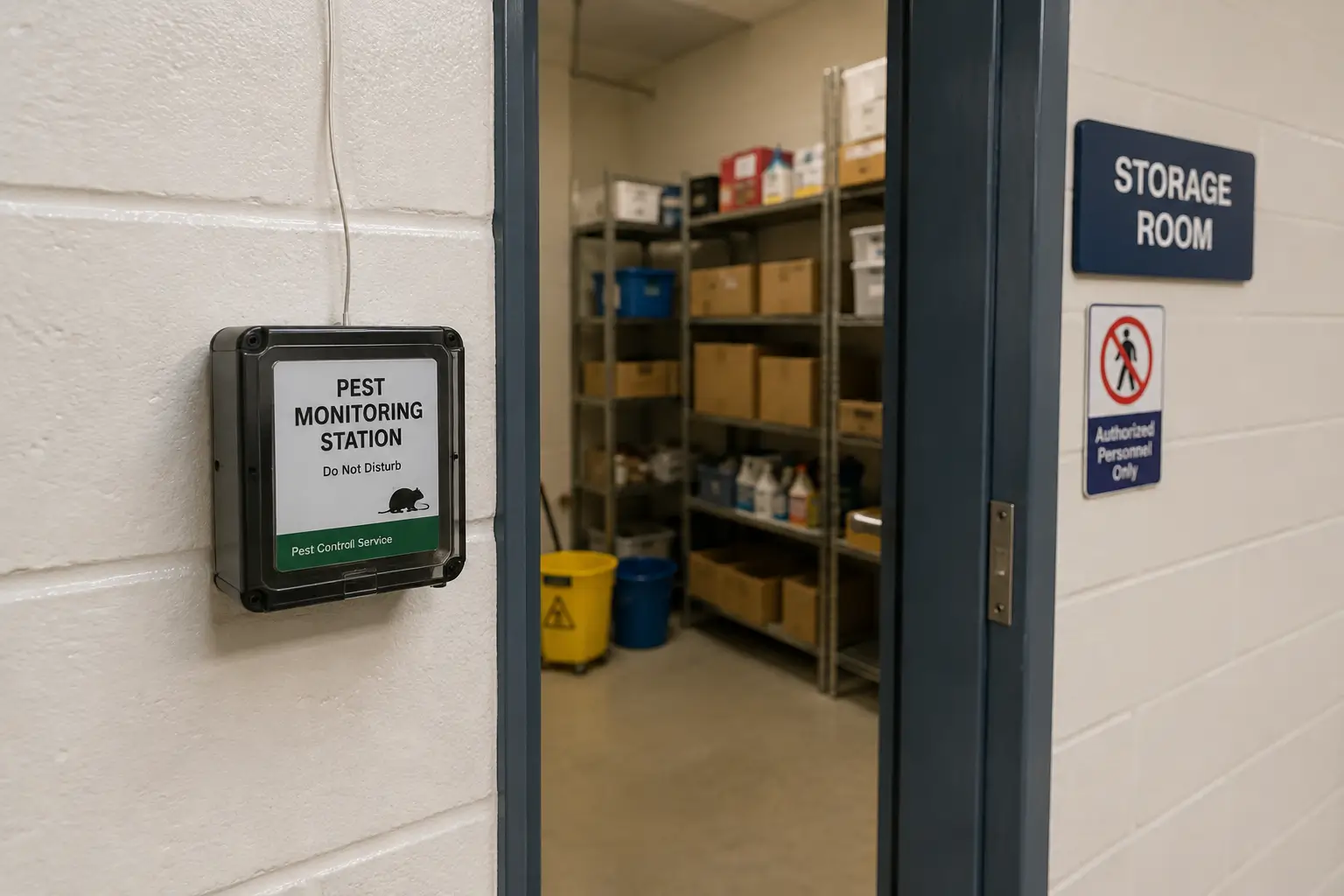
Different pests are drawn to different parts of a campus, so effective control starts with understanding which species are relevant to which areas rather than treating every school the same way.
Cockroaches are typically drawn to food residue, moisture, and warmth, which makes kitchens, cafeterias, drains, and food-storage areas the most relevant places to inspect. They tend to shelter in cracks near plumbing, behind equipment, and inside storage units. Cockroach control in a school setting focuses on these harbourage points alongside sanitation practices, since cracks and drains left unaddressed will continue to support activity even after treatment.
Rodents are commonly associated with kitchens, storage rooms, waste areas, and utility spaces where food, shelter, and access points are available. Building perimeters — especially gaps around doors, vents, and service openings — are typically checked as part of rodent control, since sealing these entry points is usually as important as any treatment applied indoors. Waste storage areas outside the building are worth checking too, as they can draw rodent activity toward the perimeter.
Ants are generally attracted to accessible food sources and can appear in classrooms, staff rooms, and cafeterias. Outdoor colonies near landscaping can also find their way indoors through small gaps, so ant control usually addresses both the food-source areas and the outdoor entry points.
Flies are generally linked to food-service areas, waste bins, and drains, particularly where sanitation lapses create breeding conditions. Fly control usually looks at interior food-handling zones alongside exterior waste management.
Mosquitoes need standing water to breed, so landscaping features, irrigation run-off, and any areas where water pools after rain or watering are the main points of focus for mosquito control, particularly near playgrounds and outdoor areas.
Termites are relevant wherever wooden fixtures, furniture, doors, or structural wood elements are present, and landscaping close to a building’s foundation can sometimes contribute to conducive conditions. Termite control for schools involves inspecting these wood-contact points rather than assuming activity is present without evidence.
Bed bugs are more relevant in boarding facilities or settings with upholstered furniture and textiles than in a typical day school. Where these conditions exist, inspection of furniture, mattresses, and soft furnishings forms the basis of bed bug control.
We do not assume any of the above pests are present at a given site — inspection findings determine what a treatment plan actually needs to address.
Offices need specialized pest control because food areas, washrooms, storage rooms, shared facilities and business-hour restrictions create different treatment requirements from residential properties.
Offices bring together food and drinks, pantries, kitchenettes, waste bins, washrooms, storage and constant visitor and employee traffic. Deliveries move in and out through service entrances, and shared areas get used by people who don’t work in that space every day. Each of these creates a different point where pests can get a foothold.
Pest activity in a workplace affects more than comfort. It can lead to employee complaints, create a poor impression for visitors and clients, and disrupt daily operations if treatment has to happen during business hours. Recurring pest activity in the same areas is usually a sign that an underlying condition, not just the pest itself, needs to be addressed.
A reliable school pest programme follows a consistent sequence rather than jumping straight to treatment. Here’s how the process typically works, from first inspection through to ongoing documentation.
A technician typically walks through classrooms, cafeterias, kitchens, food-storage areas, washrooms, storage rooms, waste areas, and the building perimeter, along with playgrounds and landscaped areas, looking for signs of activity, entry points, and conducive conditions.
Correctly identifying the species and the extent of activity matters because different pests require different control methods, and treating the wrong problem wastes time and resources. Location matters too — a few ants in a garden bed is a different situation than cockroach activity inside a food-storage room.
Integrated Pest Management (IPM) combines several tactics rather than relying on chemical treatment alone: inspection, sanitation recommendations, exclusion (sealing gaps and entry points), monitoring, and targeted treatment only where needed. The goal is to reduce pest pressure through prevention first, using treatment as one part of a broader plan rather than the whole plan.
Where treatment is required, the method is selected based on the pest identified, the specific location, the level of activity, and the instructions on the product label. Treatment in a food-storage area is approached differently than treatment along an exterior perimeter, because the surroundings and safety considerations differ.
Monitoring devices and follow-up visits help confirm whether activity has actually reduced after treatment, and whether new conditions — a fresh moisture source, a reopened gap — could allow pests to return.
Each visit is documented with inspection findings, treatment details, and recommendations for the school’s facilities team, giving administrators a record they can use for their own internal hygiene and safety files.
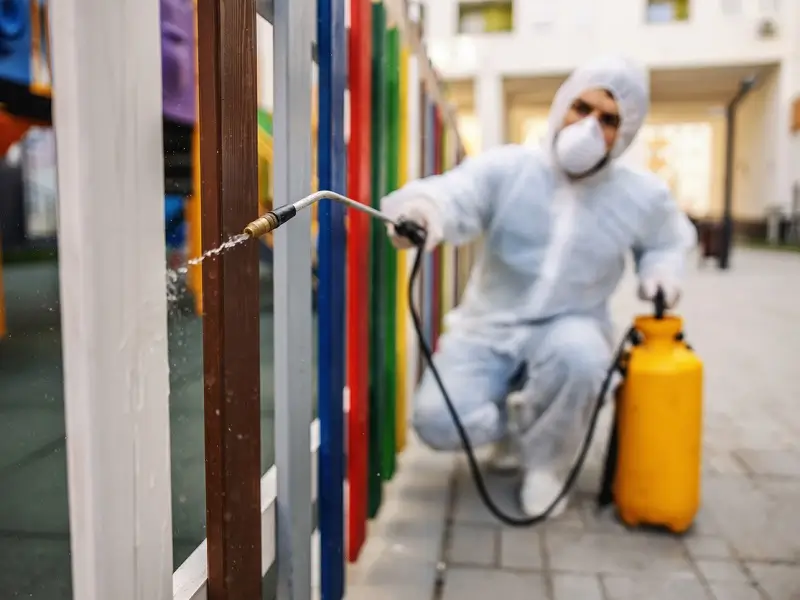
Schools understandably want reassurance that pest management won’t put students or staff at unnecessary risk. Responsible pest control reduces unnecessary exposure through how and when work is carried out — not through claims that treatments carry no risk at all.
Practical measures include:
Schools should expect a provider that minimizes exposure through appropriate planning, targeted applications, clear communication, and adherence to product safety requirements.
Every part of a campus carries a different pest risk, so the approach — and the priority — shifts depending on which area is being assessed.
Classrooms can still experience pest activity, particularly where food is brought in, storage areas are nearby, or clutter and access points provide harbourage. Periodic inspection and simple sanitation habits usually address most classroom-level issues.
These are typically the highest-priority areas because food, water, and warmth are all present. Cockroach and fly control here relies heavily on sanitation, proper food storage, and drain maintenance alongside any targeted treatment.
Poorly sealed food storage invites ants, cockroaches, and rodents. Regular inspection of packaging integrity, shelving, and storage practices helps prevent infestations, alongside any physical exclusion work around the room.
Moisture and organic buildup in drains can support fly breeding and provide harbourage for cockroaches. Drain maintenance and periodic inspection are usually more effective long-term than treatment alone.
Outdoor play areas can be affected by mosquito activity where standing water collects, and by ants nesting in soil near equipment. Managing landscaping and drainage nearby reduces these risks without needing frequent treatment of the play area itself.
Vegetation, mulch, and irrigation can create conditions for termites, ants, and mosquito breeding sites. Trimming vegetation away from structures and managing irrigation run-off is often as important as any direct treatment.
Storage rooms are frequently overlooked because they’re used infrequently, which makes them attractive to rodents and cockroaches looking for undisturbed shelter. Periodic checks and decluttering reduce hiding spots significantly.
Waste bins and collection points are a common source of fly activity and can attract rodents if not managed properly. Consistent waste collection schedules and bin maintenance reduce pressure on the rest of the facility.
The perimeter is where many pests first gain access — through gaps around doors, utility penetrations, and foundation cracks. Sealing these points is a core part of rodent and ant control, and reduces reliance on indoor treatment.
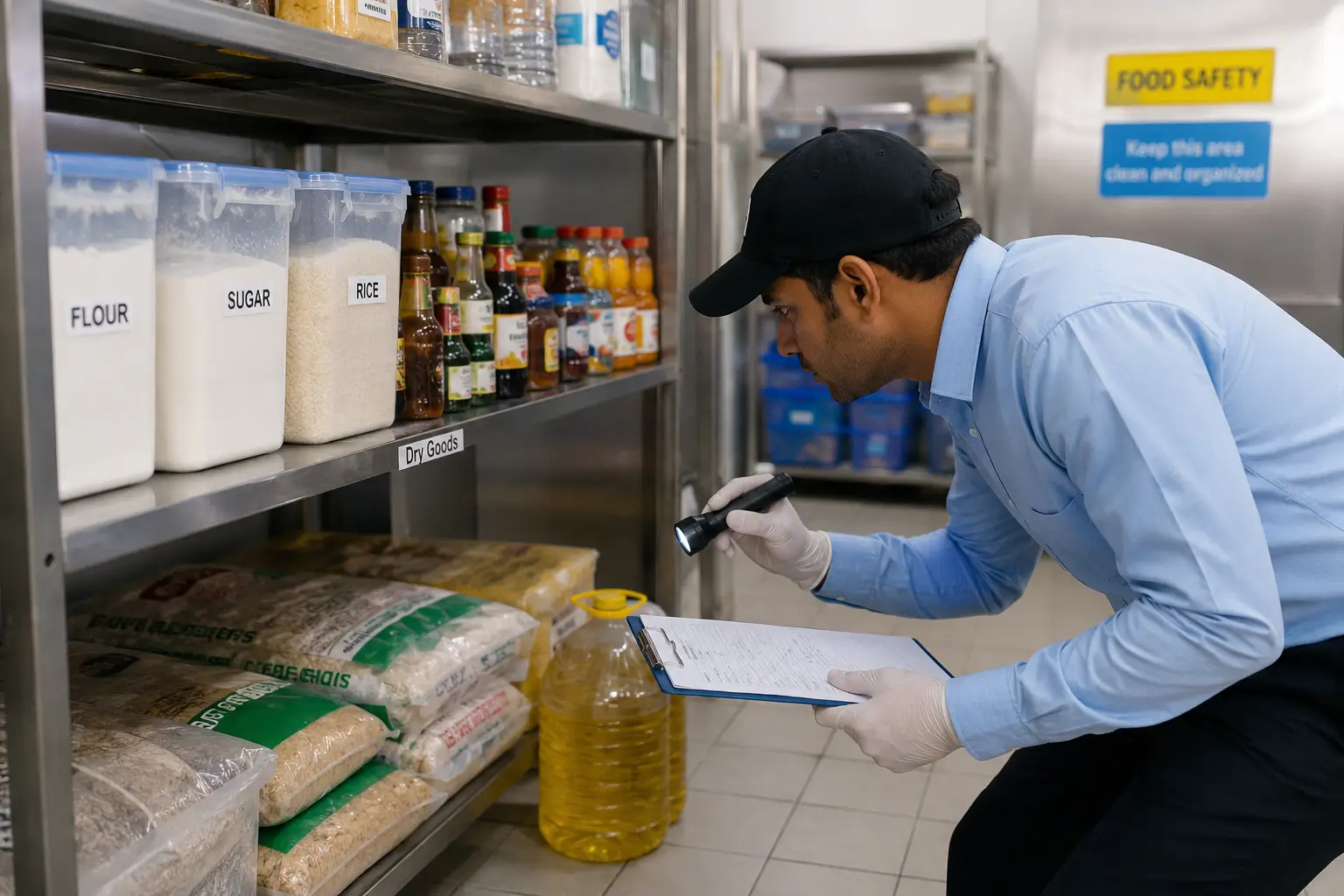
In Abu Dhabi, pest control activities fall under the regulatory oversight of the Abu Dhabi Public Health Centre (ADPHC), and schools should confirm that any provider they engage operates under the relevant ADPHC licensing framework. Beyond licensing, a structured pest-management programme should include:
Requirements can vary by facility type, so we recommend schools confirm the specific documentation and licensing requirements that apply to their site directly with ADPHC or their relevant licensing authority.
Some situations call for a faster response than a routine scheduled visit, including:
An emergency response generally focuses on containing the immediate issue — identifying the source and applying targeted treatment where appropriate — while a fuller inspection and management plan is assessed for the longer term.
Request Emergency Pest Support if your school has identified an active pest issue that needs prompt attention.
The same principles that apply to schools extend to nurseries, kindergartens, daycare and childcare facilities, colleges, universities, and training centres. Nurseries and kindergartens often have younger children in closer contact with floors, soft furnishings, and play equipment, which makes scheduling, targeted application, and clear communication with staff especially important.
Boarding facilities attached to schools or colleges introduce additional considerations, such as bed bug prevention in dormitories and textile-heavy spaces. Across all of these settings, the same inspection-led, IPM-based approach applies, adjusted for the specific layout and use of the facility.
[Placeholder section — replace with your real differentiators before publishing. Generic language below until confirmed specifics are supplied.]
We focus specifically on the needs of educational facilities rather than treating schools the same as any other commercial property. That means:
Request a School Pest Inspection to discuss your campus’s specific needs with our team.
Our team provides school pest management across Abu Dhabi’s major educational hubs, including
Al Reem Island, Yas Island, Al Raha, and Al Ain. If your school is located elsewhere in the Emirate, contact us to confirm coverage for your area.
The right frequency depends on the school’s size, pest history, food-service operations, and surrounding environment. Many facilities combine scheduled inspections with ongoing monitoring, with the frequency adjusted based on inspection findings rather than a fixed universal interval.
Pest control carried out by trained technicians following product label instructions is designed to minimize risk, but no treatment can be described as entirely risk-free. Responsible providers reduce exposure through targeted application, appropriate scheduling, and clear communication.
Treatments can often be scheduled outside school hours or during low-occupancy periods such as weekends or holidays, particularly for more involved work. Inspection and monitoring can also often be carried out with minimal disruption during the school day.
Cockroaches, ants, flies, and rodents are the pests most commonly associated with food-handling and waste areas in schools, while mosquitoes are more relevant to outdoor spaces with standing water. Termites and bed bugs are less common but relevant in specific circumstances.
Pest issues in a school affect more than hygiene — they can disrupt classes, worry parents, and create genuine safety concerns if left unaddressed. A prevention-first approach, backed by professional inspection and ongoing monitoring, is the most reliable way to keep a campus protected throughout the school year.
Request a School Pest Inspection and let our team assess your campus’s specific pest risks before they become a bigger problem.
Get 20% off your first pest control service with American Bite. Municipality-approved, family & pet safe.
Fill in your details and we'll get back to you shortly.
Our team will contact you shortly. For a faster reply, send your details on WhatsApp now.
Send on WhatsApp