
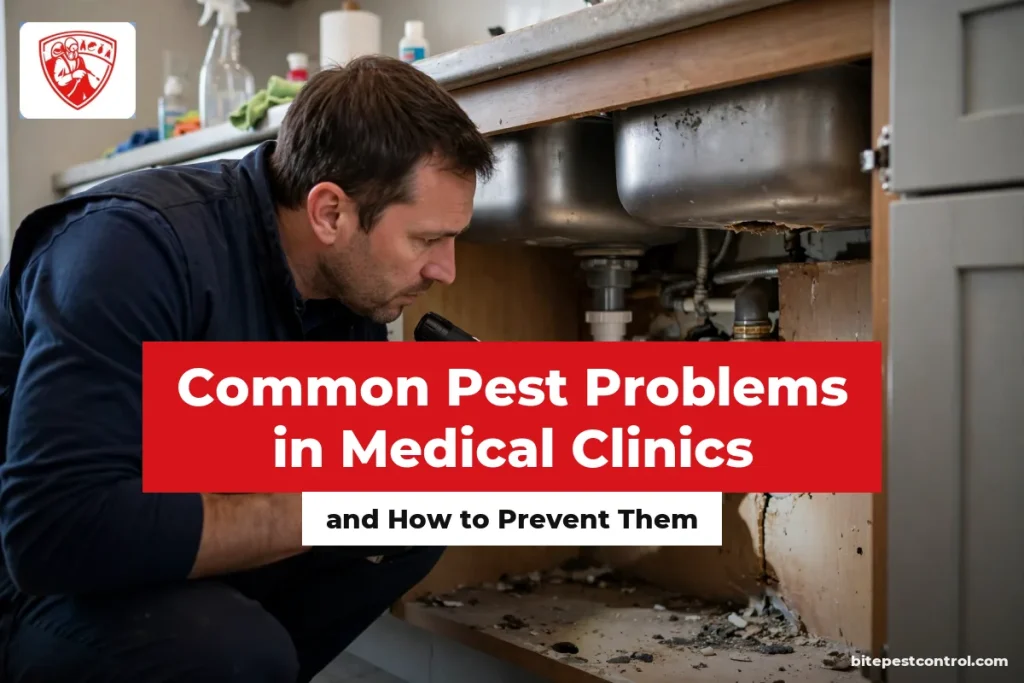
A patient waiting for a blood test sees a cockroach run under the reception desk. By the evening, a photo of it is in an online review. For a clinic, a pest is never only a pest problem. It touches patient trust, infection control and your next inspection. The good news is that most clinic pests follow the same few patterns, and your staff can stop many of them early. This guide covers the common pest problems in medical clinics, where each one hides and what your team can do, and when it is time to call in pest control for clinics in Abu Dhabi.
Why Clinics Attract Pests
A clinic looks clean, but it offers pests the three things they look for:
- Water: hand basins in every room, floor drains, toilets and the drip trays under air conditioning units
- Food: the staff pantry, snacks in drawers, sugary drinks and food that patients bring in
- Shelter: cardboard boxes from deliveries, ceiling voids, cable trunking and the inside of equipment
Many clinics in Abu Dhabi also sit in shared buildings, above a restaurant or next to a supermarket. Pests travel along shared drains, pipe risers and service corridors, so a problem can start next door and still end up in your treatment room.
The 6 Most Common Pest Problems in Clinics
Here is a quick view before we look at each one.
| Pest | Where it shows up first | First sign to watch for |
|---|---|---|
| German cockroach | Staff pantry, behind fridges and vending machines | Small brown droppings like ground pepper |
| Pharaoh ant | Near sinks, sugary drinks and dressings | A thin trail of tiny yellow ants |
| Drain fly | Toilets and floor drains | Small furry flies resting on walls near drains |
| American cockroach | Drains, plant rooms and car parks | Large reddish brown cockroach seen at night |
| Rats and mice | Stores, ceiling voids and bin areas | Droppings, gnawed boxes, scratching above the ceiling |
| Bed bugs | Waiting room seats and recovery beds | Small dark spots on seams and cushions |
1. German cockroaches
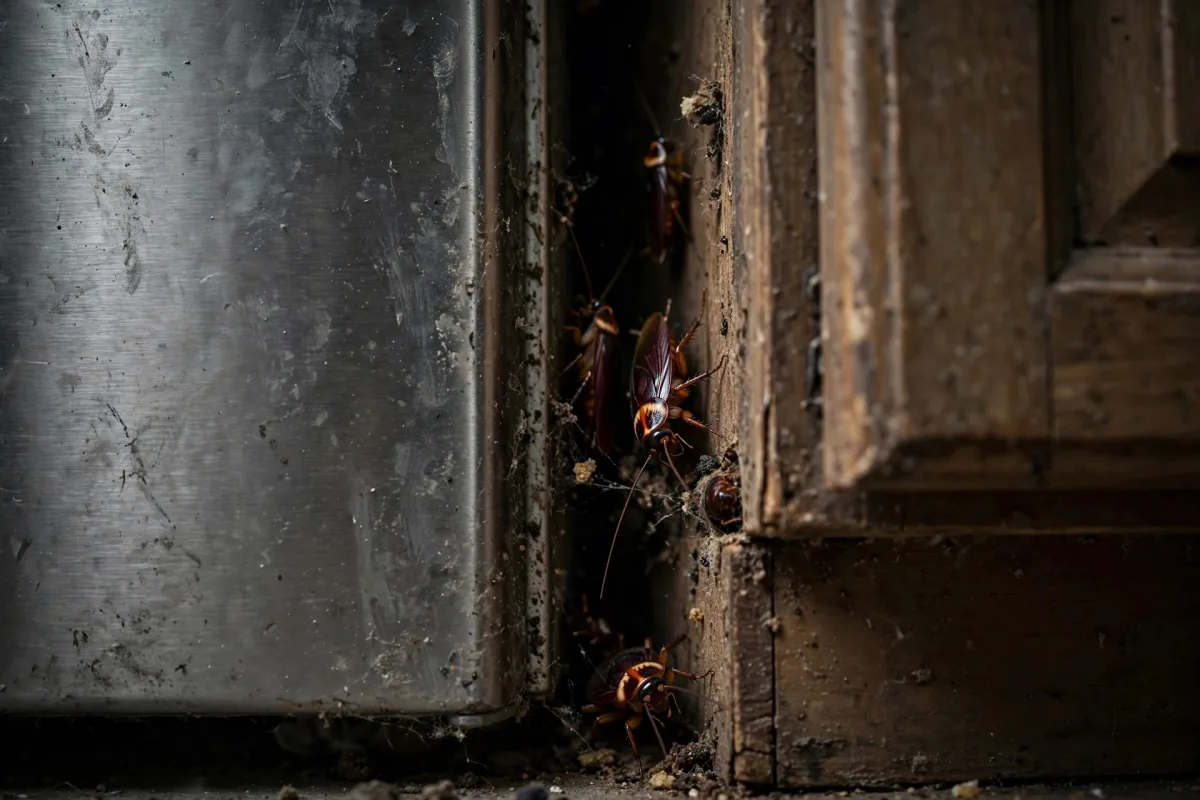
This is the cockroach that lives indoors. It is small, light brown and breeds fast in warm places close to food and water. In a clinic, look behind the pantry fridge, under the sink, inside the microwave casing and around vending machines. They often arrive inside cardboard boxes and stock deliveries.
What staff can do: unpack deliveries outside clinical areas and remove the cardboard the same day. Keep the pantry clear of crumbs and empty the bins every evening. If you see one in daylight, there are usually many more hiding. Our cockroach control service explains how gel baiting works for indoor cockroaches.
2. Pharaoh ants
Pharaoh ants are tiny, about 2 mm long, and pale yellow. They nest in wall voids, behind skirting and near hot water pipes. They are a known healthcare pest. Ohio State University reports foragers found in sterile dressing packs and IV glucose solutions in hospitals.
The tricky part is how they respond to sprays. A repellent spray makes the colony split, and small groups move off to start new nests in other rooms. This is called budding. So a quick spray from a can often turns one problem into several.
What staff can do: do not spray. Wipe up sugary spills, keep dressings and glucose in sealed containers, and report the trail so it can be baited. Slow acting bait is carried back to the nest and reaches the queens. See our ant control page for how baiting is done.
3. Drain flies
These are the small, furry, moth-like flies that sit on toilet walls. They breed in the slimy film that builds up inside drains, sink overflows and air conditioning condensate pipes. NC State Extension notes that sprays kill the adults but are not a real fix, because the larvae keep growing in the drain.
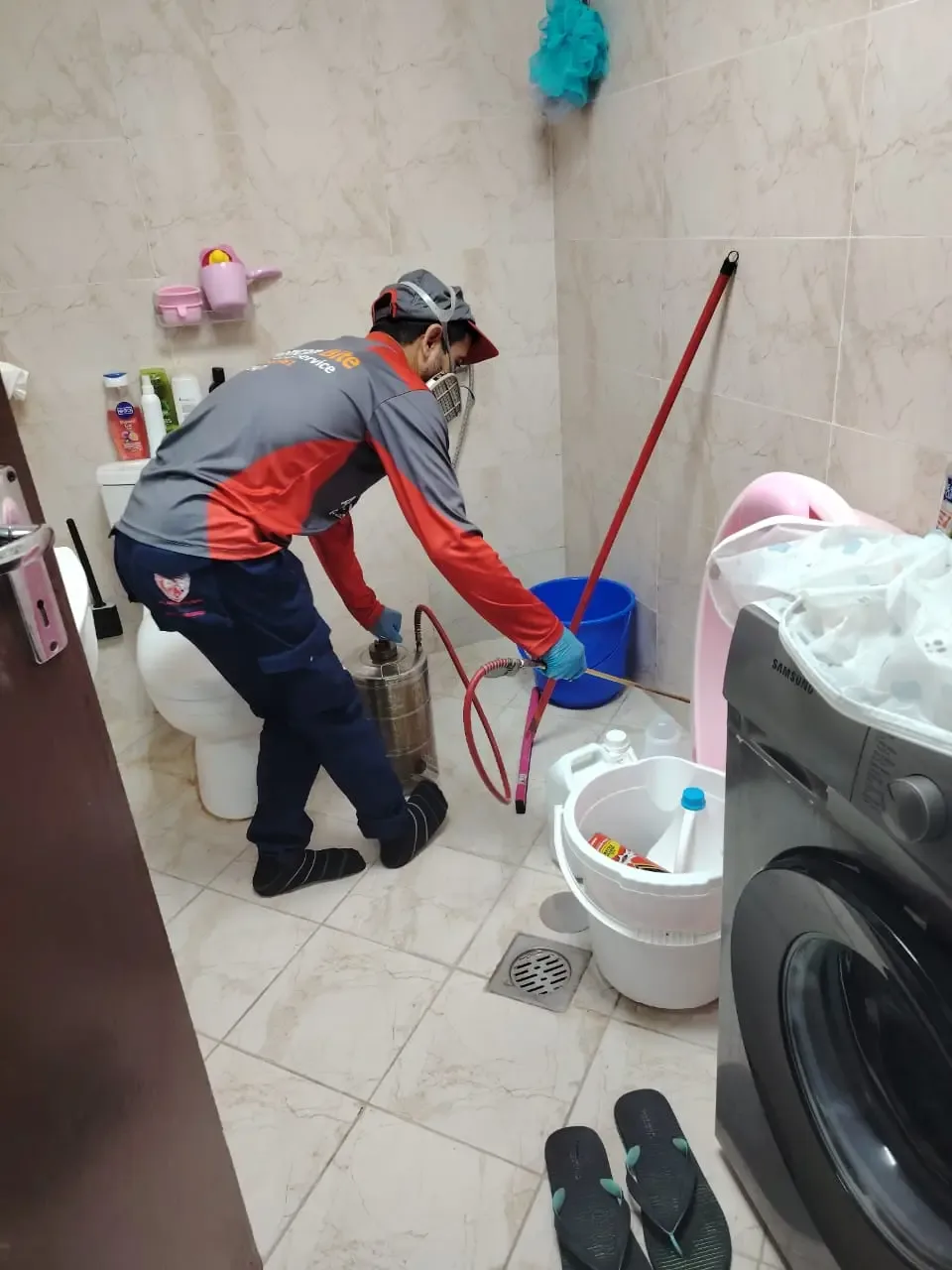
What staff can do: find the drain first. Tape a clear plastic cup, smeared inside with petroleum jelly, upside down over a suspect drain overnight. Flies caught inside show you the source. Then scrub the pipe with a stiff drain brush to remove the film. Pour water into rarely used floor drains every week so the trap does not dry out. Our flies control page covers drain treatment in more detail.
4. American cockroaches
These are the large, reddish brown cockroaches that can fly short distances. They live in sewers and manholes and come up through floor drains, usually at night. A sighting in a toilet or near a floor trap is the typical pattern.
What staff can do: keep drain covers in place, close toilet lids at night and report sightings with the exact location. Treatment focuses on drains and manholes, not inside rooms.
5. Rats and mice
Rodents look for quiet places with food nearby: stores, ceiling voids above the pantry and the area around outdoor bins. Besides the hygiene risk, they gnaw cables and packaging, and they can spoil sealed stock.
What staff can do: keep back doors closed, fit door sweeps, and keep stock off the floor. Never put down rat poison inside the clinic yourself. A rodent that dies in a ceiling void above a consultation room causes a smell that can last for weeks. Abu Dhabi’s reference standard for medical facilities limits rodenticide to outdoor use, with traps inside. Read more about our rodent control methods.
6. Bed bugs
Bed bugs do not come from dirt. They travel in on visitors’ bags and clothes and hide in the seams of upholstered waiting room chairs, recovery beds and staff rest areas.
What staff can do: choose wipeable seating where you can, check seams during deep cleaning and report any small dark spots or bites reported by staff. Our bed bug control page explains how treatment works.
Prevention Checklist by Area
Most prevention comes down to simple daily habits. Share this list with your housekeeping and admin team.
Waiting room and reception
- Ask patients not to eat in the waiting area and empty bins twice a day
- Check the seams of upholstered chairs during weekly deep cleaning
Treatment and sterilisation rooms
- Dry sinks and counters at the end of the day
- Store dressings and consumables in sealed containers, off the floor
Staff pantry
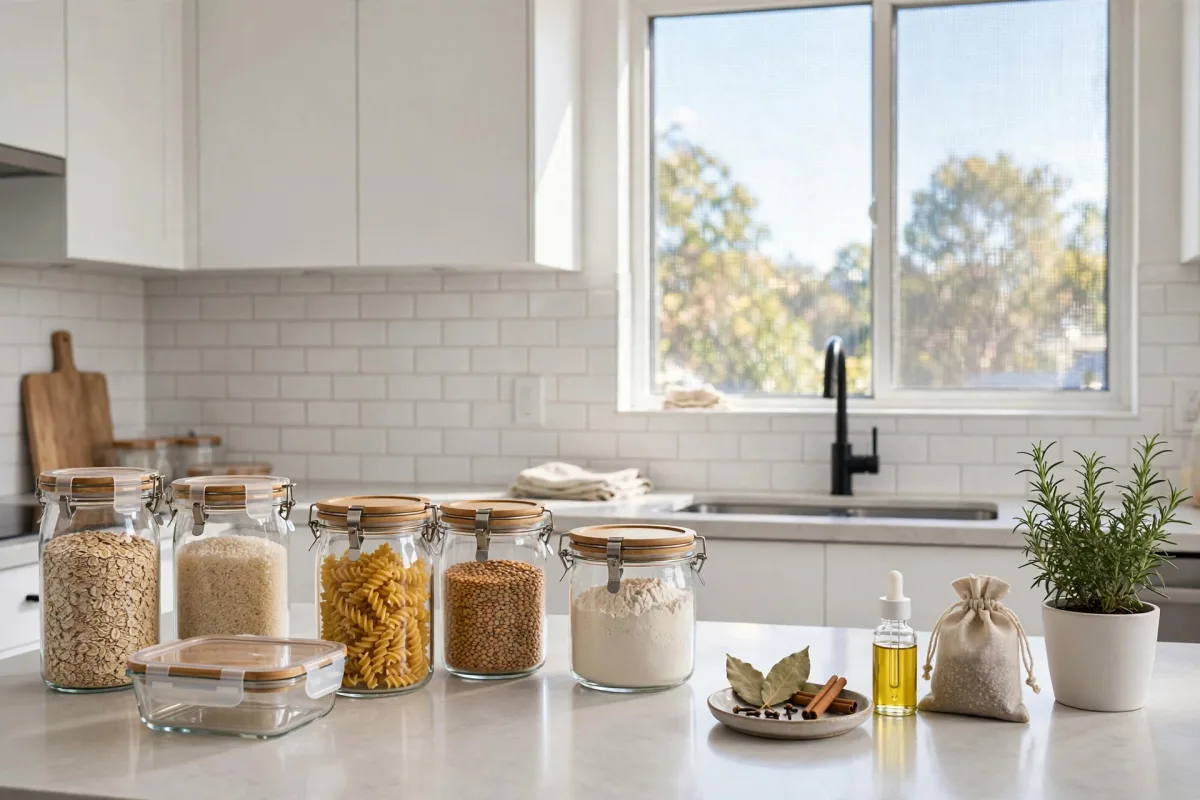
- Keep food in sealed containers and clean behind the fridge and microwave once a week
- Empty the pantry bin every evening, not every other day
Toilets and floor drains
- Pour water into rarely used floor drains every week
- Brush out drains and sink overflows during deep cleaning, not just the visible parts
Stores, deliveries and outside
- Unpack deliveries outside clinical areas and remove cardboard the same day
- Keep stock on shelves at least a few centimetres off the floor
- Keep outdoor bins closed and the back door shut, with a door sweep fitted
Early Warning Signs Staff Should Report
Pests are easier to clear when they are caught early. Ask staff to report any of these straight away:
- Droppings in drawers, cupboards or under sinks
- A cockroach seen during the day
- A trail of tiny ants anywhere near patients or supplies
- Small flies near drains that come back after cleaning
- Gnawed packaging, scratching in the ceiling or a musty smell
Keep the rule simple: take a photo, note the room and the time, and tell the person responsible for the facility. That record helps your pest control provider find the source quickly.
When Prevention Is Not Enough
Call a professional when a pest keeps coming back, shows up in more than one room, or appears anywhere near patients or sterile supplies. In Abu Dhabi, the work should be done by a licensed company using products registered with the Ministry of Climate Change and Environment, and you should get a written report after every visit for your licence file.
A proper plan starts with a full inspection, uses gel baits, traps and monitors in patient areas instead of open spraying, and books visits around your opening hours. You can see how this works on our medical centre pest control page.
Frequently Asked Questions
What is the most common pest in medical clinics?
The German cockroach is the most common, because it lives indoors near food and water, such as staff pantries and sinks. Pharaoh ants, drain flies and rodents are also common in clinics.
Why do pharaoh ants get worse after spraying?
Repellent sprays make the colony split and move to new places in the building, a process called budding. Slow acting bait works better because the ants carry it back to the nest and it reaches the queens.
How do I stop drain flies in a clinic toilet?
Find the drain they breed in, then scrub the inside of the pipe with a stiff drain brush to remove the slimy film. Pour water into rarely used floor drains every week. Sprays alone kill adults but do not stop the source.
How often should a clinic be checked for pests?
Most clinics benefit from a monthly professional visit with monitoring, plus daily checks by staff. If pests are found, follow ups are usually needed every 14 days until the problem is cleared.
Keep Your Clinic Pest Free
Most common pest problems in medical clinics are stopped by small habits: dry sinks, clean drains, sealed food and no cardboard left lying around. When something gets past those habits, act early and let a professional find the source.
American Bite Pest Control offers a free survey for clinics, dental practices and medical centres across Abu Dhabi. Send your clinic type and location on WhatsApp to +971 56 258 2461, or read about our clinic pest control service.