
Several ant species can be encountered in Abu Dhabi, and identifying them usually requires more than looking at color. Size, body pattern, nesting location, movement, food sources, and whether the ants are active indoors or outdoors can all provide useful clues. UAE records document species such as pharaoh ants, ghost ants, Camponotus species, and Tetramorium species, although there is limited reliable city-wide data for ranking these ants by prevalence.
Some species are more often associated with indoor buildings, while others are primarily encountered in soil, paving, landscaping, or around building edges. For homeowners, restaurants, offices, and property managers, correct identification matters because different ants can have different nesting habits, feeding patterns, and activity routes.
Common Types of Ants Found in Abu Dhabi
The following are useful examples of ants that may be encountered in Abu Dhabi and the wider UAE. They are not presented as a ranking of the most common species because reliable local prevalence data is limited. UAE ant records include a broad range of species, including Monomorium, Tapinoma, Tetramorium, and Camponotus.
Pharaoh Ants
Pharaoh ants (Monomorium pharaonis) are very small ants that can occur inside buildings and are documented in Abu Dhabi’s official ant-species records. They are generally yellowish to light brown, with the abdomen often appearing darker. Adult workers are only around 1.5–2 mm long, so they can be easy to overlook.
Inside a property, these ants may be associated with kitchens, food-storage areas, and other places where food and moisture are available. They can feed on both sweet and fatty foods, which makes food-handling areas particularly relevant when investigating repeated activity.
Their small size and pale color can make them difficult to distinguish from other tiny indoor ants. If very small yellowish ants keep appearing around the same areas, identification should consider their body characteristics and activity pattern rather than color alone.
Ghost Ants
Ghost ants (Tapinoma melanocephalum) are among the easier tiny ants to recognize when their two-tone body pattern is visible. They have a darker head and thorax with pale to translucent legs and abdomen. Workers are very small, generally around 1.2–1.9 mm, and the species has documented records from Abu Dhabi and Al Ain.
Ghost ants are associated with human environments and can be encountered inside buildings. In homes, activity may appear around kitchens, pantries, bathrooms, food-storage areas, and other locations where moisture or food is available.
Their pale abdomen can make them difficult to see on light surfaces. A trail of tiny ants around a kitchen or damp area could be consistent with ghost ants, but other small species can look similar, so appearance alone does not always provide a definitive identification.
Pavement Ants
“Pavement ant” is a common name used for ants in the Tetramorium group. Several Tetramorium species are recorded in the UAE, so the term should not be treated as proof that every small dark ant found around paving is one particular species.
These ants may be encountered outdoors around soil, paving, cracks, and building edges. Their location can provide an important clue when trying to determine whether the activity is coming from an outdoor nesting area.
Pavement and ground-level ants can sometimes move indoors while searching for food or suitable conditions. Finding a few ants near an entrance does not automatically mean there is an indoor colony. The direction of the trail and the location of the nesting area provide better clues.
Camponotus (Carpenter) Ants
Camponotus ants are recorded in the UAE, including several species listed in Abu Dhabi’s official ant-species guidance. Because Camponotus is a genus rather than a single species, it is more precise to discuss these ants as Camponotus ants rather than assuming every one is a carpenter ant in the conventional pest-management sense.
They are generally larger than the tiny indoor ants discussed above, although exact size and coloration vary between species. Some Camponotus ants are associated with wood or may excavate nesting galleries in suitable timber, particularly where moisture or deterioration has affected the material.
A larger ant around wooden doors, frames, cabinets, or other timber should not automatically be identified as a carpenter ant. Several Camponotus species occur in the UAE, and reliable identification may require closer examination of body structure, size, coloration, and activity.
Ant Identification Guide for Abu Dhabi Properties
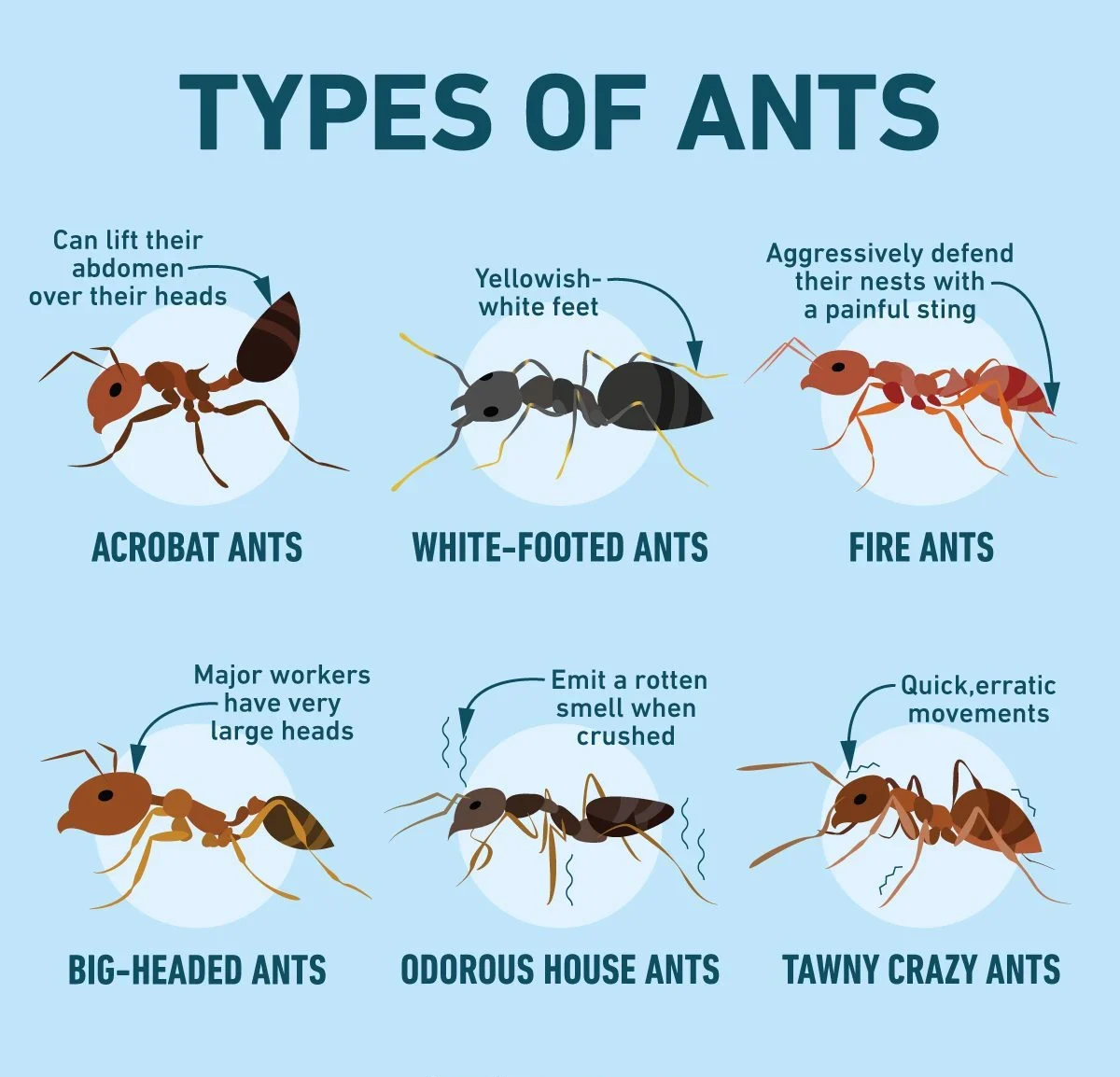
Ant identification usually depends on more than color. Size, body pattern, nesting location, trail behavior, and the environment where the ants are active can all provide useful clues.
Size
Size is one of the first features to observe. Very small ants in a kitchen may point toward species such as ghost ants or pharaoh ants, while larger ants may belong to groups such as Camponotus. Size is only a clue, however. Different species can overlap in appearance, and workers from different ant groups may be difficult to distinguish without closer examination.
Color and Body Pattern
Look at the entire body rather than simply asking whether an ant is black, brown, or yellow. Ghost ants have a distinctive contrast between their darker front body and pale abdomen and legs. Pharaoh ants are generally yellowish or light brown, sometimes with a darker abdomen. Dark ants can belong to several different groups, so a description such as “black ants” is rarely enough for reliable identification.
Where You Find Them
Location can narrow the possibilities. An ant repeatedly found inside a kitchen presents a different identification context from one found beneath paving stones or in garden soil. Indoor activity around cabinets, plumbing, food storage, or damp areas can provide useful clues.
How They Move
Watch the trail if one is present. Ants may travel in organized routes between feeding areas and nesting locations. Movement alone cannot identify a species, but repeated trails can help reveal whether the ants are following a consistent route through the property.
What They Are Feeding On
Ants can be attracted to different food sources, including sugars, food residue, proteins, and fats. Moisture can also influence where they forage. The food source does not identify the species by itself, but it can help explain why ants are concentrating in a particular area.
Where Their Trail Leads
The direction of an ant trail can sometimes be more useful than focusing on individual workers. Trails may lead toward cracks, wall gaps, landscaping, paving joints, cabinets, plumbing penetrations, or other sheltered spaces. The visible workers are only part of the colony, so the point where ants are seen is not necessarily where the colony is located.
| Ant Type | Appearance | Where You May Find It | Identification Clues |
|---|---|---|---|
| Pharaoh ant | Very small; yellowish to light brown, with the abdomen often darker | Indoor areas, kitchens, food-storage and food-handling areas | Tiny size, pale coloration and body structure |
| Ghost ant | Dark head and thorax with pale or translucent legs and abdomen | Kitchens, bathrooms, pantries and other building interiors | Distinctive two-tone body and very small size |
| Pavement / Tetramorium ants | Appearance varies among species | Soil, paving, cracks and building edges | Outdoor activity and ground-level nesting context |
| Camponotus ants | Generally larger; coloration varies by species | Outdoor areas and some wood-associated locations | Larger body and Camponotus characteristics |
Small ants can be difficult to identify from appearance alone. If the species is uncertain, professional identification may be needed before selecting a control approach.
Also Read > How Often Should You Do Pest Control in Abu Dhabi? (Villas & Apartments)
Where Are Ants Commonly Found in Abu Dhabi?
Ant activity depends on the species and the conditions around a property. Research on introduced ants in the UAE found many species associated with man-made environments where moisture and other resources are available, rather than the region’s characteristic sandy desert habitats.
Homes and Apartments
Ants may appear in kitchens, bathrooms, balconies, around windows, food-storage areas, and near plumbing. Small gaps around cabinets, doors, windows, and service penetrations can provide routes between indoor and outdoor areas. A few ants around a food source may be temporary. Repeated trails, however, suggest that the same route is being used regularly.
Restaurants and Commercial Kitchens
Restaurants provide several conditions that can attract foraging ants, including food residue, storage areas, moisture, sinks, and waste. Activity may occur around food-preparation areas, pantries, storage rooms, sinks, drains, waste areas, and points where external landscaping meets the building. Regular cleaning can reduce accessible food, but it does not necessarily address a nearby nest or entry route.
Offices
In offices, ants may be noticed around kitchenettes, pantries, break rooms, shared food areas, and waste bins. Employees may first notice them when food is left on counters or when ants begin following a regular trail. Because office kitchens and break rooms are shared spaces, repeated activity can become a nuisance even when the source is outside the immediate room.
Gardens and Landscaped Areas
Outdoor ants may be found around soil, plants, irrigation areas, paving, and building edges. Landscaping can provide shelter and food sources while also creating routes toward structures. Outdoor ant activity does not automatically mean there is an indoor infestation. The more useful question is whether ants are crossing into the building and repeatedly foraging indoors.
Commercial and Industrial Properties
Warehouses, storage areas, service spaces, loading areas, waste zones, and external perimeters can all provide potential routes for ants. Large properties also have more possible entry points. Identifying where activity begins can therefore be more useful than treating every location where individual ants are seen.
Why Do Ants Enter Buildings in Abu Dhabi?
Ants enter buildings mainly when a property provides accessible food, water, moisture, shelter, or suitable nesting conditions. Building gaps, doors, windows, plumbing penetrations, and landscaping close to structures can create routes between outdoor areas and indoor spaces.Environmental conditions can influence ant activity, but it is too simplistic to say that ants enter buildings only because Abu Dhabi is hot. Buildings can provide reliable access to food and water as well as protected spaces for foraging and nesting. Homes, restaurants, and commercial properties can become more attractive when food residue, spills, waste, or moisture remain accessible.
Why Do Ants Keep Coming Back?
Ants often keep returning when the underlying source or route remains available. The colony may be nearby, an outdoor nesting area may remain active, or workers may continue finding food and water through the same entry point.
Other reasons include:
- Food or food residue remains available.
- Moisture or leaks have not been addressed.
- Cracks and other entry points remain open.
- Outdoor nesting areas are close to the building.
- Workers continue following an established trail.
- Activity extends beyond the area where ants were first noticed.
Visible worker ants are only part of the colony. Repeated activity therefore does not necessarily mean that the visible trail is the actual source.
How to Tell If Ant Activity Is Becoming a Pest Problem
Seeing a few ants does not automatically mean there is a major infestation, but persistent trails, repeated activity, or ants appearing in several areas can indicate an ongoing source or entry route.
Pay closer attention when you notice:
- Ant trails appearing every day
- Activity in several rooms
- Repeated ants around food-storage areas
- Ants entering through cracks or gaps
- Activity around damp areas
- Ants continuing to appear despite routine cleaning
- Visible nesting activity outdoors or near the building
The pattern matters more than one isolated sighting. A single ant near a window is different from a trail that repeatedly crosses a kitchen.
How to Reduce Ant Activity Around Your Property
Prevention can reduce conditions that attract ants, although it cannot guarantee that ants will never appear.
Store Food Properly
Keep food in suitable sealed containers and avoid leaving exposed food on counters. Pay particular attention to sweet foods and other items that may attract foraging ants.
Clean Spills and Food Residue
Clean food spills and crumbs promptly, especially around kitchens, dining areas, pantries, and food-storage spaces. Waste should also be removed regularly.
Address Moisture and Leaks
Check sinks, plumbing connections, damp cabinets, and other areas where water may remain available. Fixing a leak can remove an important attractant.
Seal Suitable Entry Points
Inspect gaps around doors, windows, walls, service penetrations, and other potential routes. Reducing unnecessary access points can make it harder for ants to move indoors.
Maintain Outdoor Areas
Keep landscaped areas, paving, and building edges in good condition. Pay attention to irrigation and areas where vegetation or soil sits directly against the structure.
Manage Waste
Use suitable waste containers and keep waste areas clean. Food residue around bins can provide an easy feeding opportunity for ants.
Do Different Ant Species Need Different Control Methods?
Yes. Ant-control strategies can vary because different species have different nesting habits, food preferences, colony structures, and activity patterns.
For example, a tiny indoor ant repeatedly moving through a kitchen may require a different assessment from a ground-nesting ant entering through an exterior crack. Addressing only the visible trail may not resolve the underlying source.
Identification therefore matters when selecting a control approach. When the species is uncertain, the property should be assessed based on the ants’ appearance, activity pattern, nesting possibilities, and environmental conditions.
When Should You Contact an Ant Control Professional?
Professional assessment may be appropriate when ant activity keeps returning, trails appear repeatedly, several areas are affected, or ants are entering kitchens and food-storage spaces. It can also be useful when the species is difficult to identify or routine prevention has not resolved the activity.
For homes and businesses, identifying the source and entry route can help determine what type of control approach is appropriate. If persistent ant activity is affecting your property, our Ant Control Abu Dhabi service page explains the inspection and treatment options available.
You may interested in > How to Choose the Best Pest Control Company in Abu Dhabi
Frequently Asked Questions
What types of ants are found in Abu Dhabi?
Several ant species are recorded in Abu Dhabi and elsewhere in the UAE, including ghost ants, pharaoh ants, Camponotus species, and Tetramorium species. There is limited reliable city-wide data for ranking these species by prevalence.
What Are the Tiny Ants Found in Abu Dhabi Kitchens?
Tiny ants found in Abu Dhabi kitchens may include ghost ants or pharaoh ants, both of which are associated with indoor environments. Their similar size means identification should not rely on size alone.
What Do Pharaoh Ants Look Like?
Pharaoh ants are very small and generally yellowish to light brown, with the abdomen often darker. They are typically around 1.5–2 mm long, although reliable identification should consider more than size and color.
What Do Ghost Ants Look Like?
Ghost ants have a dark head and thorax with pale or translucent legs and abdomen. Their very small size and two-tone appearance are useful identification clues.
How Can I Identify an Ant Species?
Start with size, color, body pattern, location, movement, feeding behavior, and the direction of the trail. Appearance provides useful clues, but reliable species identification may require closer examination.
Why Are Ants Entering My Kitchen?
Ants may enter kitchens because they provide food, water, moisture, and sheltered routes. Cracks, plumbing penetrations, doors, windows, and nearby outdoor areas can also provide access.
Do Different Ant Species Need Different Control Methods?
Yes. Species can differ in nesting habits, colony structure, food preferences, and movement patterns. Correct identification can therefore help determine an appropriate control strategy.