
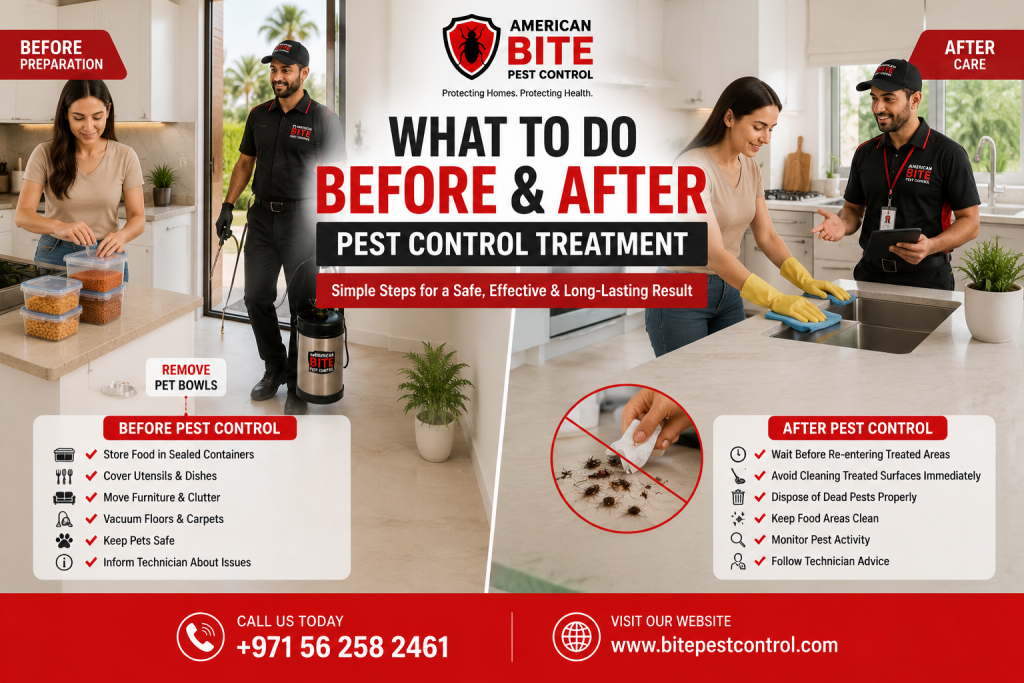
Preparing your home before a pest control treatment and following the right steps afterward can make a significant difference in the results. Simple actions like storing food properly, clearing treatment areas, and avoiding early cleaning allow pest control products to work as intended and help eliminate pests more effectively.
Whether you’re dealing with cockroaches, termites, ants, bed bugs, rodents, or other household pests, every treatment comes with specific preparation and aftercare guidelines. Knowing what to expect also helps protect your family, pets, and belongings during the process.
In this guide, you’ll learn exactly what to do before and after pest control treatment, what mistakes to avoid, how long treatments typically take to work, and when it’s safe to return to your normal routine. If you’ve scheduled a professional pest control service in Abu Dhabi, these practical tips will help you get the best possible results.
Why Preparing for Pest Control Is Important
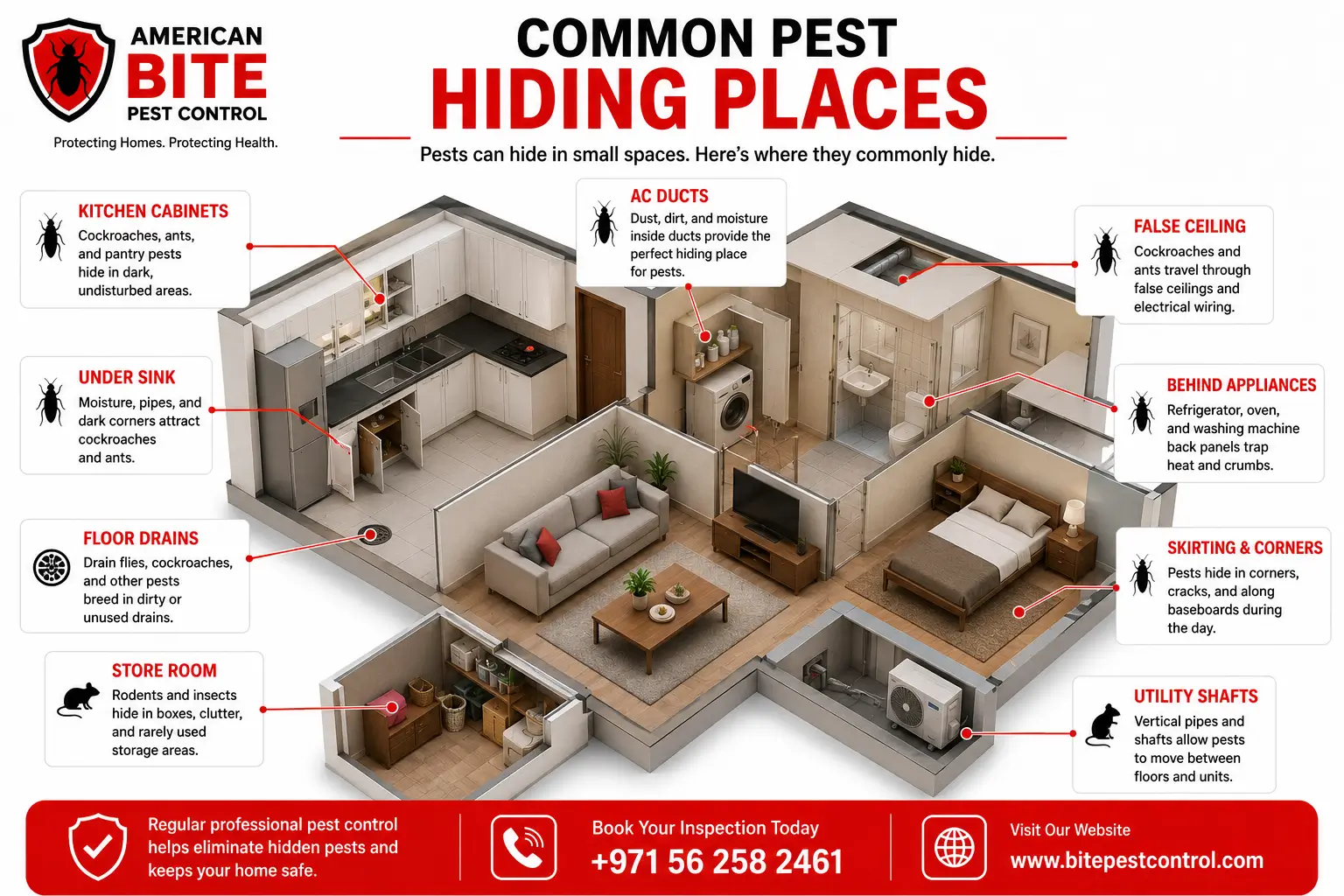
Homes and businesses in Abu Dhabi face pest activity throughout the year due to the warm climate. Pests such as cockroaches, ants, rodents, termites, and bed bugs often hide behind kitchen cabinets, under appliances, inside wall voids, and around plumbing lines. If these areas are blocked by furniture, clutter, or stored items, technicians cannot treat them properly, leaving active hiding spots behind.
Preparing your property before the visit allows technicians to inspect high-risk areas, apply treatments where pests are most active, and complete the service without unnecessary delays. It also helps protect food, utensils, pet supplies, and personal belongings while reducing the chance of disturbing treated surfaces immediately after the service.
What to Do Before Pest Control Treatment
Taking a few simple steps before your appointment helps technicians reach the areas where pests are most active. In many Abu Dhabi properties, cockroaches hide behind modular kitchen cabinets and under sinks, ants travel through utility lines and wall gaps, while rodents use false ceilings, storage rooms, and service ducts to move between spaces. Clearing these areas allows for more accurate inspection and treatment.
Clean Kitchen Surfaces
Wipe countertops, dining tables, and food preparation areas to remove crumbs, grease, and food residue. In warm indoor environments, even small food sources can attract cockroaches and ants, making treatment less effective if they remain available.
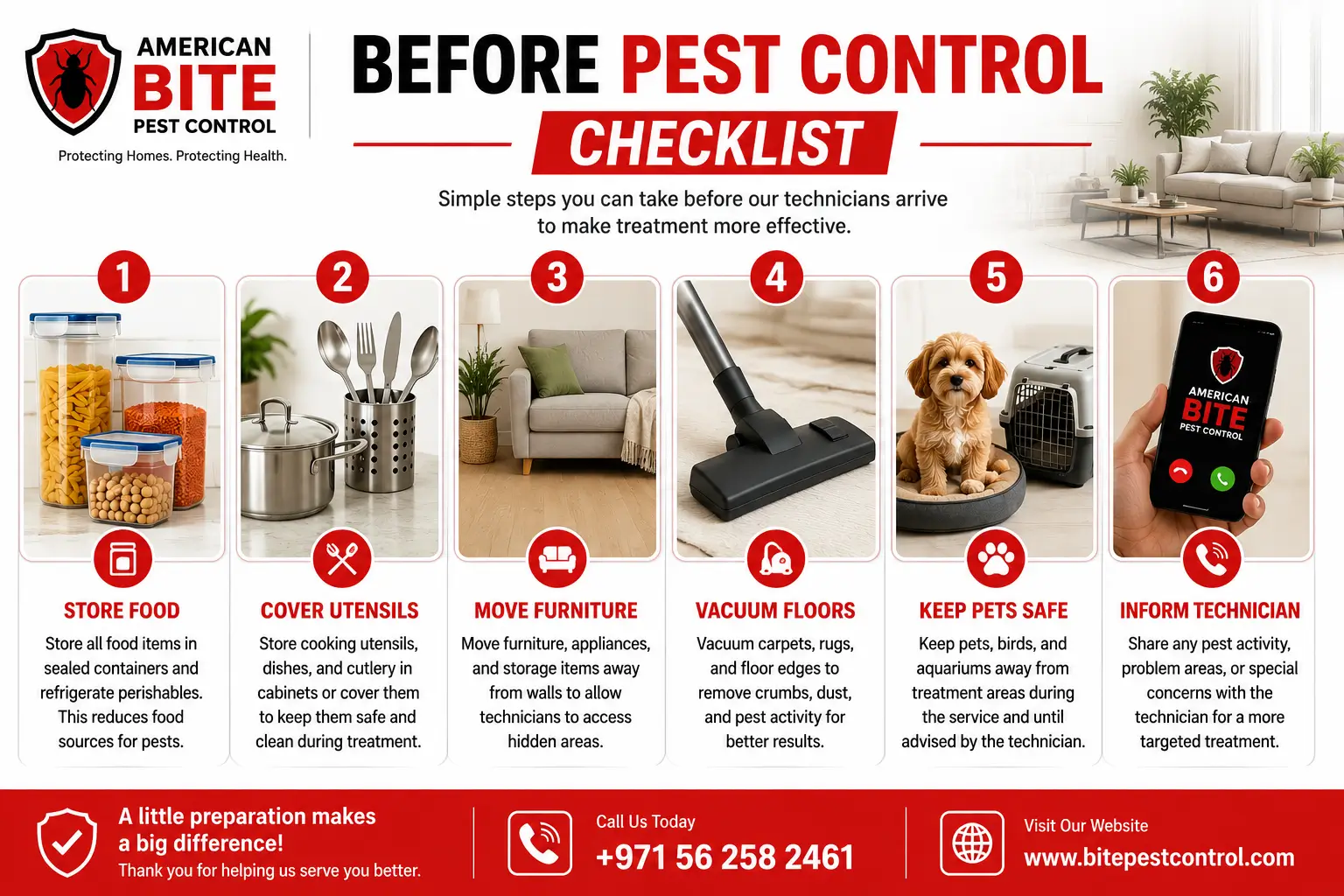
1. Store Food and Cover Utensils
Place dry food, fresh produce, pet food, and cooking utensils in sealed cabinets or airtight containers. This keeps them protected during treatment and makes kitchen preparation quicker after the service is complete.
2. Move Furniture Away from Walls
If possible, pull large furniture, refrigerators, washing machines, and storage units slightly away from the wall. These hidden spaces are common harbourage areas where cockroaches, ants, and rodents remain unnoticed for long periods.
3. Vacuum Floors Before the Visit
Vacuum carpets, rugs, and floor edges to remove food particles, insect debris, and dust. Avoid mopping immediately before treatment, as technicians may need dry surfaces when applying certain products or baiting systems.
4. Keep Children and Pets Away
Arrange a safe area for children, cats, dogs, and pet birds while treatment is being carried out. Aquariums should be covered, and air pumps switched off if advised by the technician.
5. Share Details About Pest Activity
Tell the technician where you’ve noticed pests, such as under kitchen sinks, around AC units, inside bathrooms, near floor drains, on balconies, or in storage areas. This helps target active nesting and movement zones instead of relying on a general treatment.
What to Expect During Pest Control Treatment
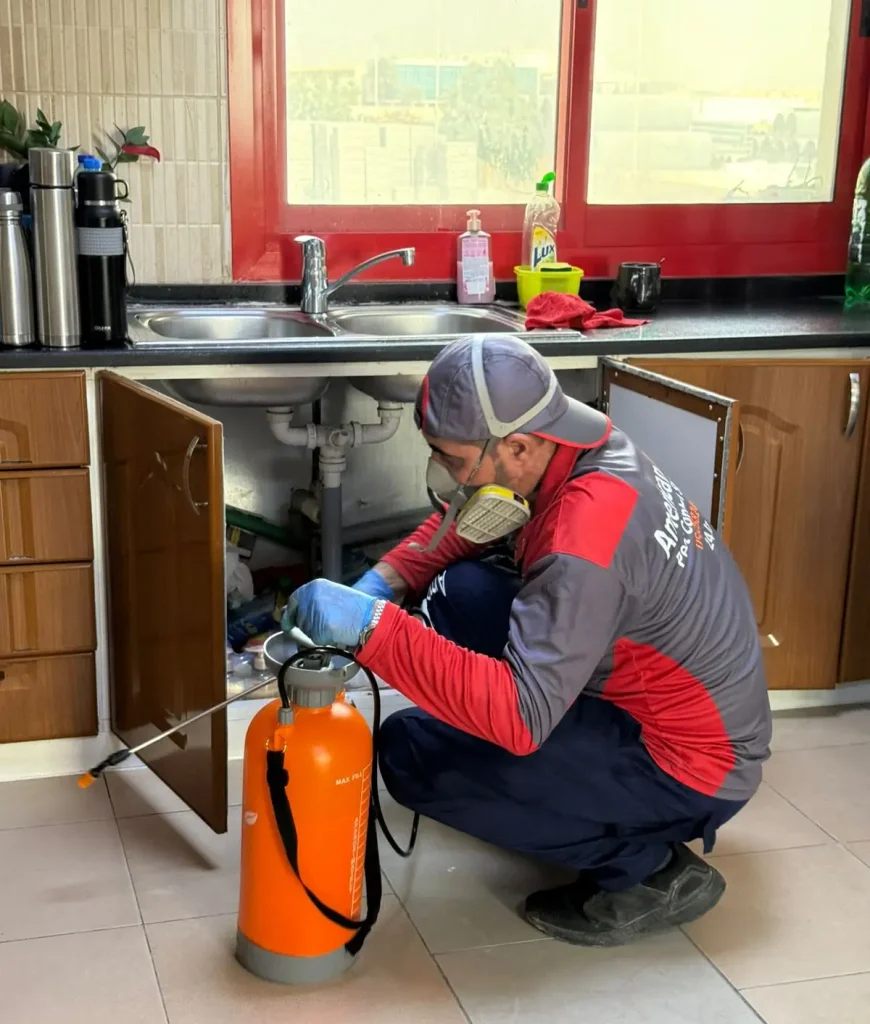
Most residential pest control visits in Abu Dhabi take 30 minutes to 2 hours, depending on the property size and the type of infestation. During the visit, you’ll notice technicians focusing on areas where pests are most active rather than treating the entire property unnecessarily.
For cockroach control, gel baits and residual treatments are commonly applied around kitchen cabinets, plumbing lines, floor drains, and utility spaces. Termite treatments may involve drilling or soil injection around the building perimeter, while rodent control includes placing tamper-resistant bait stations or traps in strategic locations. If you’re dealing with bed bugs, technicians carefully treat bedrooms, bed frames, mattresses, and nearby furniture where the insects hide.
Before leaving, the technician will explain how long you should stay out of treated areas, when it’s safe to resume normal activities, and whether a follow-up visit is recommended. You’ll also receive simple aftercare instructions to help the treatment remain effective for as long as possible.
What to Do After Pest Control Treatment
Following the right aftercare steps helps the treatment remain effective and prevents pests from returning too soon. While the exact instructions may vary depending on the pest and treatment method, these guidelines apply to most professional pest control services.
Wait Before Re-entering Treated Areas
Follow the re-entry time recommended by your technician. This allows treated surfaces to dry completely and ensures the products work as intended before family members or pets use the area again.
Avoid Cleaning Treated Surfaces Immediately
Don’t mop floors, scrub skirting boards, or wipe treated cracks and corners for the period advised by your technician. Removing the treatment too early can reduce its effectiveness, especially for cockroach and ant control.
Dispose of Dead Pests
It’s normal to notice increased pest activity or dead insects during the first few days after treatment. Wear gloves when disposing of them and place them in a sealed waste bag before discarding.
Keep Food Preparation Areas Clean
Once the recommended waiting period has passed, clean kitchen countertops and dining surfaces before preparing food. There’s no need to wash areas that were not treated.
Monitor Pest Activity
You may still see a few pests after treatment, particularly with cockroaches and ants, as hidden insects come into contact with the treatment. If activity continues beyond the expected timeframe, contact your pest control provider for a follow-up inspection.
Follow Any Recommended Follow-Up Schedule
Some infestations, including bed bugs, termites, and rodents, may require more than one visit to achieve complete control. Attending scheduled follow-up treatments helps eliminate remaining pests and prevents the infestation from re-establishing itself.
Mistakes to Avoid After Pest Control
Many homeowners expect immediate results, but a few common mistakes can reduce the effectiveness of a professional pest control treatment. Avoiding these mistakes gives the treatment enough time to work and helps prevent pests from returning.
- Cleaning Too Soon: Avoid mopping floors, washing skirting boards, or scrubbing treated corners immediately after the service. Removing the treatment early can reduce its effectiveness, especially for cockroach and ant infestations.
- Using DIY Insect Sprays: Avoid spraying supermarket insecticides over professionally treated areas. Mixing different products can interfere with baits and residual treatments, making them less effective.
- Leaving Food and Waste Exposed: Open food containers, overflowing bins, and food crumbs continue to attract pests even after treatment. Keeping kitchens clean and disposing of waste regularly helps prevent new infestations.
- Ignoring Small Signs of Pest Activity: Seeing a few insects after treatment doesn’t always mean it has failed. However, continued activity after the expected treatment period should be reported to your pest control company so they can inspect the property and recommend a follow-up visit if required.
- Skipping Follow-Up Treatments: Some infestations, particularly termites, bed bugs, and rodents, require more than one visit. Completing the recommended follow-up schedule improves long-term results and helps prevent pests from becoming established again.
How Long Does It Take for Pest Control to Work?
The time needed to see results depends on the type of pest, the level of infestation, and the treatment method used. Some pests begin disappearing within a day, while others require several days or multiple visits to eliminate the entire colony. Seeing a few pests after treatment is normal, as they continue moving through treated areas before they die.
| Pest | Typical Time to See Results |
|---|---|
| Cockroaches | 3–7 days, with heavy infestations taking up to 2 weeks. |
| Ants | 2–7 days, depending on the colony size and bait activity. |
| Bed Bugs | 2–6 weeks. Severe infestations may require more than one treatment. |
| Rodents | 1–3 weeks, depending on the infestation level and bait consumption. |
| Termites | Several weeks. Complete colony elimination takes longer than surface treatments. |
If pest activity continues well beyond these timeframes, arrange a follow-up inspection. In many cases, untreated entry points, neighbouring infestations, or severe pest activity may require additional treatment to achieve complete control.
Is Pest Control Safe for Children and Pets?
Yes, professional pest control is generally safe for children and pets when treatments are applied by trained technicians and the recommended safety instructions are followed. Modern pest management focuses on targeted applications instead of treating every surface, reducing unnecessary exposure while effectively controlling pests.
For homes with young children, cats, dogs, birds, or aquariums, let your technician know before the treatment begins. They may recommend temporarily keeping pets away from treated areas, covering fish tanks, or following a specific re-entry time based on the treatment used.
Every property is different. A villa with outdoor landscaping may require a different treatment approach than an apartment or a restaurant kitchen. That’s why professional technicians assess the property first and provide aftercare instructions based on the pest, treatment method, and affected areas. Following these simple guidelines allows the treatment to remain effective while helping your family, pets, and visitors return to a safe and comfortable environment.
Frequently Asked Questions
Can I sleep in my house after pest control?
Yes, but only after the recommended re-entry time provided by your pest control technician. Once treated areas are dry and declared safe, you can use your home as usual. Always follow the instructions specific to the treatment used.
Should I clean my house before pest control?
Yes. Clean kitchen countertops, remove food crumbs, store food in sealed containers, and reduce clutter around treatment areas. This allows technicians to reach pest hiding places more easily and improves treatment coverage.
Can I mop the floor after pest control?
Avoid mopping treated floors or cleaning skirting boards immediately after treatment. Most pest control products need time to remain active on treated surfaces. Your technician will tell you when normal cleaning can resume.
Why am I still seeing pests after treatment?
Seeing a few pests after treatment is normal. Cockroaches, ants, and other insects often leave their hiding places after coming into contact with the treatment. Activity should gradually decrease over the following days. If it continues longer than expected, schedule a follow-up inspection.
Can I stay home during pest control treatment?
It depends on the treatment and the affected area. Some services allow you to remain in unaffected parts of the property, while others require you to leave for a few hours. Your technician will explain the safest option before treatment begins.
How soon can I cook after pest control?
Once kitchen worktops and food preparation areas are safe to use, you can resume cooking. If any surfaces need cleaning before food preparation, your technician will advise you during the aftercare briefing.
Should I wash my bedding after bed bug treatment?
If your technician recommends washing bedding, use hot water and dry it on a high heat setting before placing it back on the bed. Following the aftercare instructions is essential for successful bed bug treatment.
Can I use insect spray after professional pest control?
No. Using household insect sprays over professionally treated areas can reduce the effectiveness of baiting systems and residual treatments. If pest activity continues, contact your pest control provider instead of applying additional products yourself.
Need Professional Pest Control in Abu Dhabi?
Preparing your property correctly before treatment and following the recommended aftercare steps can make a noticeable difference in the results. If you’re dealing with cockroaches, termites, ants, bed bugs, rodents, mosquitoes, or birds, our experienced technicians provide safe, effective, and long-lasting pest control solutions tailored to your property. Contact American Bite Pest Control today to book an inspection and protect your home or business with professional pest management services.