
Pests create several different types of health risks, not just one. Mosquitoes can spread disease, rodents and flies can contaminate food, cockroaches and dust mites can trigger allergies and asthma, and bed bugs mainly cause bites and skin irritation. Knowing which risk applies to which pest helps you respond correctly instead of overreacting or ignoring a real problem.
What Diseases and Health Problems Can Pests Cause?
Not every pest in your home is a disease risk. Some cause contamination, some cause allergic reactions, and some cause nothing more than an itchy bite. The table below separates these categories clearly.
| Pest | Main Health Risk | Examples |
|---|---|---|
| Mosquitoes | Disease transmission | Dengue (confirmed local risk), malaria (travel-related only, UAE is malaria-free) |
| Rodents (rats, mice) | Contamination and disease | Leptospirosis, Salmonella, food and surface contamination |
| Cockroaches | Contamination and allergies | Bacterial spread on food surfaces, asthma and allergy triggers |
| Flies | Food contamination | Mechanical spread of bacteria from waste to food |
| Bed bugs | Bites and irritation | Itchy welts, skin reactions, sleep disruption |
| Fleas and ticks | Bites, species-dependent risk | Skin irritation; disease risk depends on the species present |
| Dust mites | Allergies, not infection | Allergic rhinitis, asthma flare-ups |
Mosquitoes and Mosquito-Borne Diseases
Mosquitoes are an important disease-vector pest in the UAE, with locally reported dengue transmission. This does not mean every mosquito bite carries risk. It means mosquito control matters more than for pests that only cause irritation.
Dengue and Other Relevant Mosquito-Borne Risks
After the severe rainfall and flooding in April 2024, UAE health authorities reported an increase in dengue cases, while standing water created additional mosquito-breeding opportunities. The Aedes aegypti mosquito, present in the UAE, is the primary vector for dengue. Most people who catch dengue experience high fever, severe headaches, joint and muscle pain, nausea, vomiting, and a skin rash, and cases remain rare relative to the population. Severe dengue is uncommon but can occur, which is why anyone with these symptoms after a mosquito bite should see a doctor rather than self-treat.
Malaria works differently. The World Health Organization has certified Dubai and the wider UAE as malaria-free, meaning there is no local transmission of malaria within the country. The risk that exists is for residents who travel to malaria-endemic countries and return, not from mosquitoes bred locally. If you or a family member develop fever after travel to an endemic region, mention the travel history to your doctor.
Where Mosquitoes Breed in Dubai and Abu Dhabi
Mosquitoes need still water to complete their life cycle, and this city offers plenty of it if left unmanaged. Common breeding points include blocked drains, uncovered water tanks, plant saucers, irrigation puddles, construction site pools, and any container that collects rainwater or AC condensation. Even small containers of stagnant water can provide breeding sites for mosquitoes.
How to Prevent Mosquito Breeding
Empty and scrub any container that holds water at least once a week, since eggs can survive on damp surfaces. Cover water tanks and storage drums completely, and check that garden and balcony drains are not blocked. Fix leaking outdoor taps and AC units, since dripping water creates small pools that are easy to miss. Use fitted window screens and mosquito nets where infestations are already active.
When Professional Mosquito Control May Be Needed
Call a licensed provider when breeding sites cannot be eliminated on your own, such as shared building drainage, large irrigated gardens, or construction areas next to your property. A professional mosquito control Abu Dhabi service can identify hidden breeding points that routine cleaning misses and apply larvicide safely in standing water that cannot be drained.
Rodents and Diseases They Can Spread
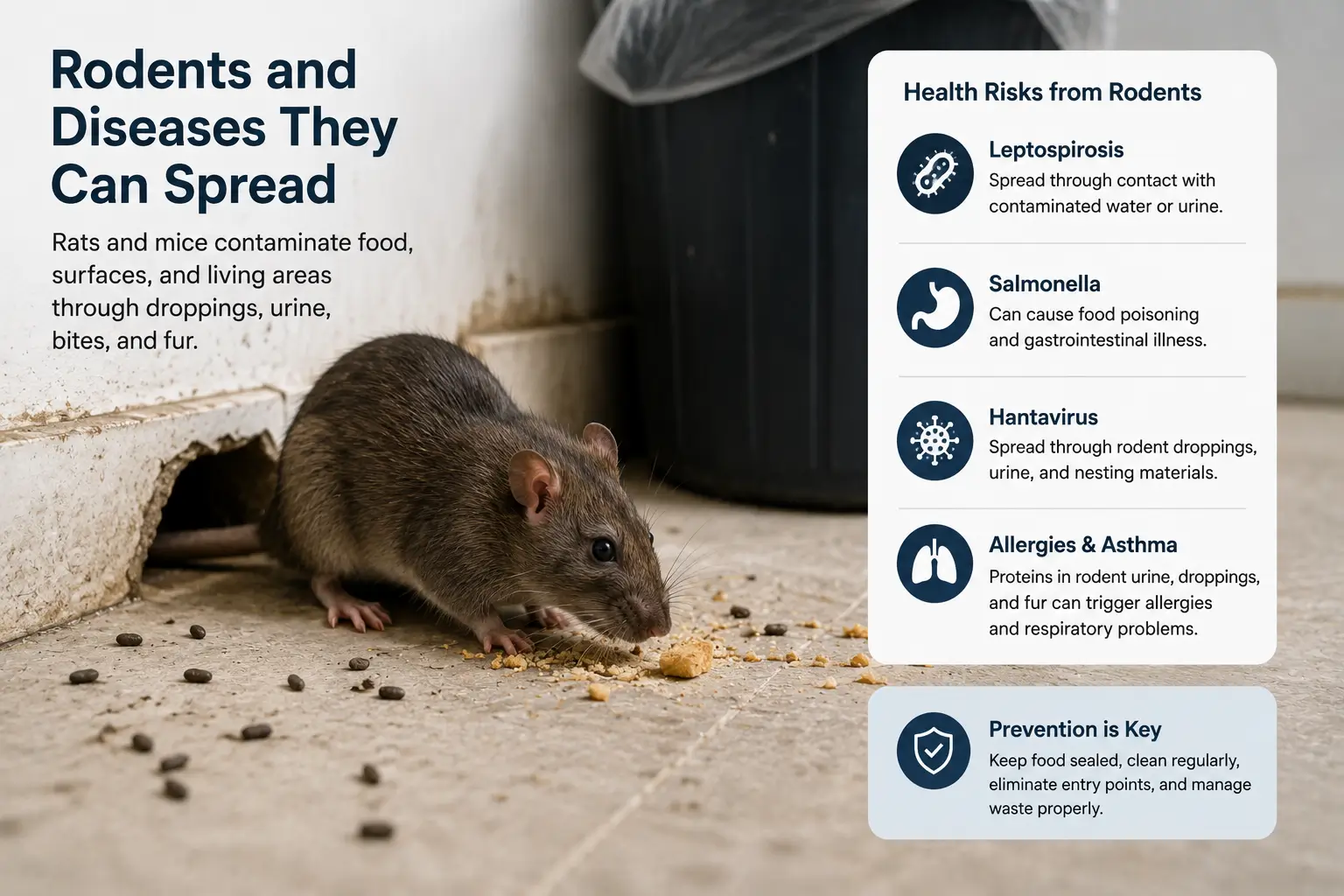
Rats and mice are a contamination risk first and a disease risk second. The two are connected, but they are not the same thing.
Leptospirosis and Other Health Risks
Leptospirosis is a bacterial infection linked to water or soil contaminated with infected rodent urine. It is not common, but it is documented as a recognized rodent-associated risk by health authorities worldwide, and cases are more likely where flooding, stagnant water, and rodent activity overlap. Symptoms can resemble flu, so anyone with fever after exposure to flooded or rodent-active areas should mention this to a doctor rather than assume it will pass.
How Rats and Mice Contaminate Homes and Businesses
Rodents contaminate far more than they directly infect. Droppings, urine, and fur can end up on kitchen counters, food packaging, and storage shelves as rodents forage at night. Rodent-contaminated food or surfaces can expose people to bacteria such as Salmonella, particularly when contaminated food is eaten without proper cooking or cleaning. Gnaw marks on wiring, packaging, and structural gaps are also signs of an active infestation, not just cosmetic damage.
How to Prevent Rodent Infestations
Store dry food in sealed containers rather than original packaging, since rodents can chew through cardboard and thin plastic. Seal gaps around pipes, vents, and door thresholds, since mice can fit through openings as small as a coin. Remove clutter in storage areas and garages where rodents like to nest, and keep outdoor bins closed and away from walls. If you find droppings, gnaw marks, or hear scratching in walls or ceilings, treat it as an active infestation rather than a one-off sighting.
Cockroaches and Health Risks
Cockroaches do not inject disease the way mosquitoes do. Their risk comes from what they pick up and spread as they move between drains, waste, and food.
Food Contamination
Cockroaches travel through sewers, drains, and garbage before walking across kitchen counters and food. In the process, they can mechanically carry bacteria such as E. coli and Salmonella on their legs and bodies, contaminating any surface they cross. This is why cockroach sightings near food-prep areas should always be treated as a hygiene issue, not just an annoyance.
Allergies and Asthma
Cockroach droppings, shed skin, and saliva contain proteins that are well-documented allergy and asthma triggers, particularly in children. This is a separate risk from contamination and does not require live cockroaches in the home. Even dried cockroach debris in dust can trigger symptoms in sensitive people, which is one reason infestations in older buildings can affect respiratory health long after roaches are gone.
How to Control Cockroaches
Fix leaking pipes and taps, since cockroaches need moisture more than almost any other resource. Keep kitchens free of food residue overnight, including pet food left out in bowls. Seal cracks around cabinets, baseboards, and pipe entry points where roaches hide during the day. For established infestations, gel baits and professional cockroach control Abu Dhabi treatments reach nests inside walls that surface sprays cannot.
Flies and Food Contamination
Flies move freely between garbage, drains, sewage, and exposed food, picking up bacteria on their legs and mouthparts along the way. When a fly lands on food after visiting waste, it can deposit those bacteria directly, contributing to gastrointestinal illness in some cases. This is a contact-transfer risk, not a bite or sting risk, which is why fly control depends almost entirely on sanitation. Covering food, sealing bins, cleaning up spills quickly, and fixing torn window screens does more to reduce fly-related risk than any spray.
Bed Bugs, Fleas and Ticks
These three pests are grouped together because their health risks are frequently exaggerated online.
Bed bugs are a bite and irritation problem, not an established disease-transmission risk. Bites cause itching, red welts, and in some cases sleep disruption from the discomfort or the stress of an infestation, but bed bugs are not currently recognized as major vectors of infectious disease. If bites become infected from scratching, that secondary infection needs medical attention, not the bite itself.
Read more > How Many Bed Bug Treatments Are Needed to Get Rid of an Infestation?
Fleas and ticks are different from each other, and their risk depends heavily on the species present and whether pets or wildlife are involved. In most UAE residential settings, flea problems stem from pets and cause itching and skin irritation rather than disease. Tick-related disease risk varies by species and region, so avoid assuming any one outcome without checking the specific situation, ideally with a vet if pets are involved.
Dust Mites and Indoor Allergies
Dust mites do not bite and do not transmit disease. They are a pure allergy trigger, feeding on shed skin cells in bedding, carpets, and upholstered furniture. Their droppings and body fragments contain proteins that cause allergic rhinitis and can worsen asthma, especially in humid indoor conditions where mite populations grow fastest. Washing bedding in hot water weekly, using allergen-proof mattress and pillow covers, and keeping indoor humidity lower with air conditioning are the main ways to reduce exposure.
Why Certain Pest Problems Occur in Dubai and Abu Dhabi
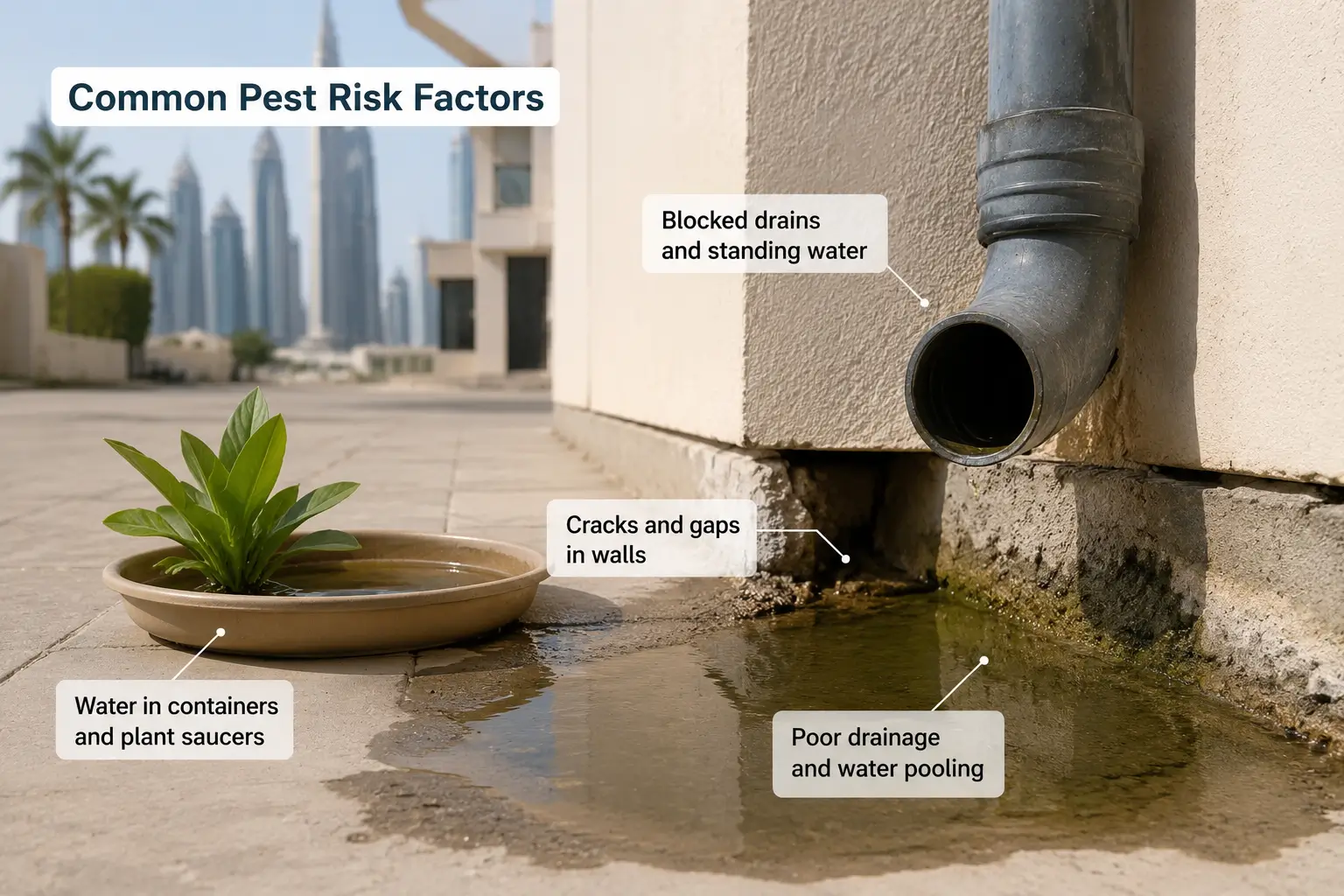
Local pest pressure comes down to a handful of recurring conditions rather than the climate alone. Irrigation systems in gardens and landscaped areas create damp soil that mosquitoes and some insects favor. Construction sites often leave standing water in excavation pits or equipment, and unmanaged waste areas near residential buildings give rodents and flies a steady food source. Drains that are not maintained regularly become both a mosquito breeding site and a cockroach corridor between units. Buildings with unsealed gaps around plumbing and utility lines give rodents easy access regardless of how clean the interior is kept. None of these factors are unique to any one neighborhood, they simply need active management wherever they exist.
How to Prevent Pest-Related Health Risks at Home
- Remove standing water from plant saucers, buckets, and blocked drains weekly.
- Fix leaking taps, pipes, and AC units promptly.
- Keep food, including pet food, in sealed containers.
- Clean food-preparation areas and counters after every use.
- Remove household and kitchen waste daily rather than letting it build up.
- Seal cracks, gaps, and utility openings around the home’s exterior.
- Keep drains clear and have them inspected if water backs up.
- Cover water tanks and storage containers completely.
- Inspect dark, damp areas like under sinks and storage rooms periodically.
- Arrange a professional inspection if signs of infestation continue after these steps.
When Should You Call Professional Pest Control?
A few sightings are not always cause for alarm, but certain signs point to an active infestation that DIY methods will not fully resolve. These include repeated pest sightings at the same location, droppings in cabinets or storage areas, nesting materials, cockroach egg cases behind appliances, rodent gnaw marks on packaging or wiring, recurring flies despite clean surfaces, visible mosquito breeding sites you cannot drain yourself, or bed bug signs that return after treatment. Effective pest control starts with identifying the pest species and its entry point or food source, since treating symptoms without addressing the source usually leads to the problem coming back within weeks.
Pest Control and Public Health in Dubai and Abu Dhabi
Pest control in the UAE is not left entirely to private companies. Both emirates run their own public-health frameworks for disease-carrying pests.
Dubai Municipality
Dubai Municipality’s Public Health Pest Control Section licenses and regulates pest control providers operating in the emirate, and Integrated Pest Management (IPM) is a core part of this framework, an approach that has been widely adopted since 2018 to reduce reliance on chemical treatments while maintaining effectiveness. Food businesses in particular are required to run a documented IPM programme as part of their food safety management system under Dubai’s Food Code, rather than relying on informal arrangements with a technician. For the current licensing process and requirements, check Dubai Municipality’s official channels directly.
Abu Dhabi Public Health Centre
The Abu Dhabi Public Health Centre (ADPHC) manages public health pest control across the emirate, covering disease-carrying pests such as mosquitoes, flies, rodents, and ticks, as well as potentially dangerous pests like snakes, scorpions, spiders, and wasps. This responsibility moved to ADPHC from Abu Dhabi’s waste management company in 2024, and the centre now provides regular disease vector management in public areas along with on-call services for resident requests. Residents and businesses can report pest issues or request an inspection through the TAMM platform or the 800555 government contact centre. ADPHC has also been reported to be piloting technology-driven mosquito surveillance, including solar-powered smart traps, to track mosquito activity and support more targeted control.
How to Reduce the Risk of Pest-Related Diseases
The pattern across every pest in this article is the same: remove standing water, control access to food and waste, seal entry points, and act early on infestation signs instead of waiting for them to grow. Mosquitoes need water, rodents and flies need food and waste access, and cockroaches need moisture and clutter. Removing these conditions does more to protect your household’s health than any single treatment, and it is the same principle both Dubai Municipality and ADPHC build their public-health pest programmes around.
Frequently Asked Questions
What diseases can pests cause in Dubai and Abu Dhabi?
The main confirmed disease risk comes from mosquitoes, which can transmit dengue locally. Rodents carry a contamination and disease risk through leptospirosis and Salmonella. Cockroaches and flies mainly contaminate food and surfaces, while bed bugs, fleas, and dust mites cause bites, irritation, or allergic reactions rather than infectious disease.
Which pests can spread diseases in the UAE?
Mosquitoes are the clearest disease-vector pest in the UAE, with confirmed local dengue risk. Rodents can spread leptospirosis and Salmonella through contaminated urine, droppings, and food. Cockroaches and flies can mechanically spread bacteria but are not classified as primary disease vectors the way mosquitoes and rodents are.
Can mosquitoes in Abu Dhabi spread dengue?
Yes, dengue cases have been reported in the UAE, and health authorities noted an increase after the 2024 flooding, which created more standing water for mosquito breeding. Most cases cause fever and flu-like symptoms, and severe cases are uncommon but possible, so persistent high fever after a mosquito bite should be checked by a doctor.
Can mosquitoes transmit malaria?
No local malaria transmission occurs in Dubai or Abu Dhabi. The UAE is certified malaria-free by the World Health Organization. The only malaria risk for residents comes from travel to endemic countries, not from mosquitoes bred locally.
Can cockroaches make you sick?
Cockroaches can mechanically spread bacteria like E. coli and Salmonella onto food and surfaces after moving through drains and waste. They are also a well-documented trigger for allergies and asthma, particularly in children, through their droppings and shed skin rather than through a bite or sting.
What diseases can rats and mice spread?
Rats and mice are linked to leptospirosis, spread through contact with contaminated urine or water, and can expose people to bacteria such as Salmonella through contaminated food and surfaces. Most of the risk comes from contamination of food storage and prep areas rather than direct contact with rodents.
Can flies contaminate food?
Yes. Flies move between waste, drains, and food, picking up bacteria on their legs and depositing it on any surface they land on. This contact-based contamination is the main food safety reason for fly control, rather than a bite or sting risk.