
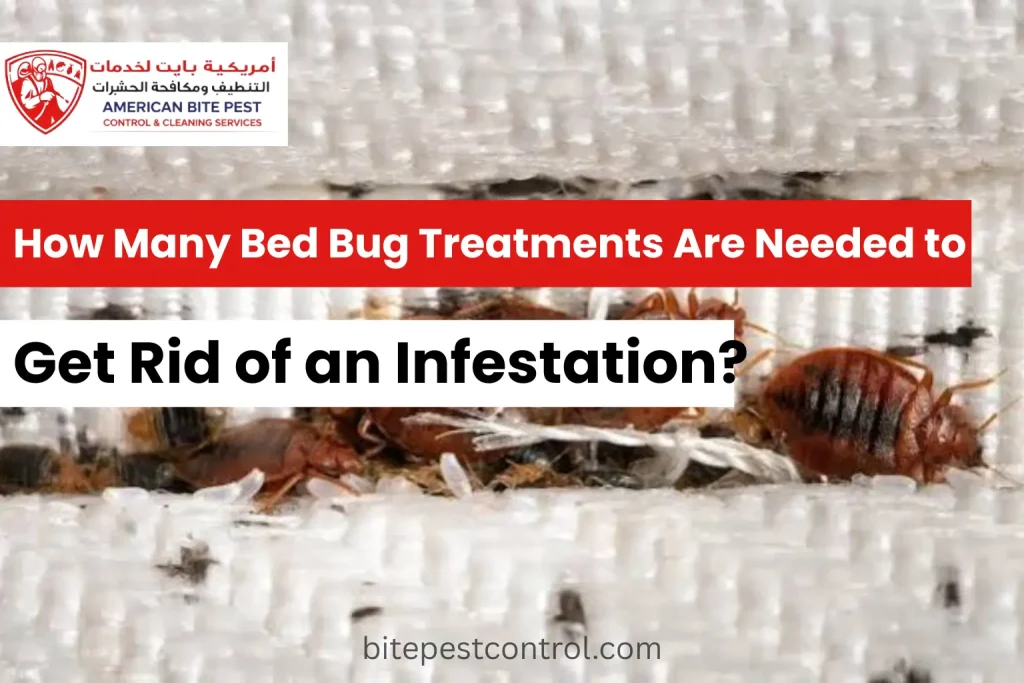
Most bed bug infestations need more than one treatment. A typical insecticide-based professional treatment program may require 2–3 visits, while some small infestations can be resolved with one treatment and monitoring. Properly performed heat treatment may also eliminate an infestation in a single visit. The exact number depends on the size of the infestation, treatment method, preparation, hiding places, and whether bed bugs are being reintroduced.
There is no fixed number that applies to every property. A studio apartment with bed bugs around one bed is very different from a three-bedroom villa where the infestation has spread to several rooms. A proper inspection is the best way to determine how extensive the problem is and what treatment schedule is appropriate.
If you are dealing with bed bugs in an apartment, villa, hotel, or staff accommodation in Abu Dhabi, the number of treatments should be based on what a technician finds during inspection rather than a fixed package chosen before the property is assessed.
For bed bug control in Abu Dhabi, contact American Bite Pest Control to arrange an assessment and get a treatment plan based on your property’s infestation.
How Many Bed Bug Treatments Do You Usually Need?
There is no universal treatment schedule, but the following gives you a useful general idea:
| Situation | Typical treatment approach |
|---|---|
| Very small, early infestation | May need one treatment plus follow-up monitoring |
| Typical insecticide-treated infestation | Often requires 2–3 professional visits |
| Large or long-standing infestation | May require 3 or more treatments |
| Properly performed heat treatment | May be completed in one treatment |
| Reinfestation or activity from another area | Additional treatment may be necessary |
The required number can change based on several factors:
- The size and severity of the infestation
- Whether adults, nymphs, and eggs are present
- Where bed bugs are hiding
- Whether eggs survive the initial treatment
- How thoroughly the property was prepared
- Whether other rooms or furniture are affected
- Whether another apartment or area is contributing to renewed activity
EPA notes that bed bug control can take weeks or longer and that the process may need to be repeated to eliminate remaining bugs and eggs.
Why Do Bed Bugs Often Need More Than One Treatment?
The main reason is simple: some bed bug eggs can survive an initial treatment.
Bed Bug Eggs Can Survive Some Treatments
Many insecticides do not reliably kill bed bug eggs. If eggs remain after the first application, they can hatch later and produce nymphs that need to be controlled. This is why a follow-up treatment may be part of the original plan rather than a sign that the first treatment failed. EPA specifically notes that treatments may need to be repeated after eggs hatch because many pesticides do not kill eggs. The timing of a follow-up should depend on the treatment method, product instructions, infestation, and inspection findings rather than an arbitrary number of days.
Bed Bugs Hide in Hard-to-Reach Places
Bed bugs are small and can hide in narrow cracks and protected areas. Common hiding places include:
- Mattress and box spring seams
- Bed frames and headboards
- Cracks in furniture and skirting boards
- Behind wall outlets and switch plates
- Drawers, closets, and storage areas
- Gaps around furniture and other resting places
EPA identifies missed hiding places, inadequate preparation, and failure to treat nearby areas as common reasons why bed bug treatments do not completely control an infestation.
A Few Surviving Bugs Can Keep the Infestation Going
Seeing fewer bed bugs after treatment is encouraging, but it does not automatically prove that the infestation has been eliminated. Surviving bugs, newly hatched nymphs, or activity in an untreated hiding place can allow the problem to continue. This is why monitoring and follow-up inspection are important parts of professional bed bug control.
How Long Should You Wait Between Bed Bug Treatments?
There is no single waiting period that applies to every bed bug treatment.
The appropriate interval depends on:
- The treatment method used
- The product and its label instructions
- The severity of the infestation
- Where activity was found
- What the follow-up inspection shows
- Whether eggs are expected to hatch after the first treatment
A professional treatment plan should therefore use inspection and monitoring to determine when another visit is appropriate. Repeating a treatment on a fixed schedule without considering what is actually happening inside the property is not the best approach. If you still see activity, record where and when you noticed it and tell your pest control provider. EPA recommends continued inspection and monitoring because retreatment may be needed when remaining bugs or newly hatched eggs are found.
Can One Bed Bug Treatment Get Rid of an Infestation?
Yes, sometimes—but it should not be guaranteed before the property is inspected. A single treatment has a better chance of succeeding when the infestation is small, localized, properly identified, and thoroughly treated.
When One Treatment May Be Enough
One treatment may be sufficient when:
- The infestation is detected early
- Activity is limited to a small area
- The property is properly prepared
- All affected areas are identified and treated
- A properly performed heat treatment is used
- There is no ongoing source of reinfestation
When One Treatment May Not Be Enough
Additional treatment is more likely to be needed when:
- Bed bugs have spread across multiple rooms
- There are many hiding places or heavy clutter
- Eggs remain after an insecticide treatment
- Parts of the property were not accessible during treatment
- Another room or connected unit is also affected
- New bed bugs are introduced after treatment
Heat treatment can affect bed bugs at different life stages when the required temperature is reached and maintained throughout the treated area. However, professional heat treatment still requires careful application, and it does not provide a residual barrier against bed bugs that are introduced later.
Does the Treatment Method Affect How Many Visits You Need?
Yes. The treatment method can make a significant difference.
| Treatment method | Typical pattern | Main consideration |
|---|---|---|
| Insecticide treatment | Often requires follow-up visits | Some eggs may survive the initial application |
| Heat treatment | May be completed in one treatment | The required temperature must reach the affected areas |
| Steam | Usually used for targeted areas | Useful for specific cracks, fabrics, and furniture |
| Integrated treatment | Depends on the infestation | Combines appropriate control and monitoring methods |
Chemical or Insecticide Treatment
Insecticide-based treatment can combine direct treatment with products that continue working after application. Because some products do not reliably kill eggs, follow-up inspection and treatment may be necessary.
The exact number of visits depends on the product, infestation, treatment coverage, and what is found during follow-up. EPA recommends a comprehensive approach rather than repeatedly applying pesticides whenever a bug is seen.
Heat Treatment
Professional heat treatment raises temperatures in the treated area to levels that are lethal to bed bugs when properly applied. It can therefore be an effective single-treatment option.
However, successful heat treatment requires proper equipment, temperature monitoring, and coverage of the entire affected area. Heat also has no residual effect, so precautions are needed to prevent bed bugs from being reintroduced afterward.
Why an Integrated Approach Can Be More Effective
Bed bug control is often more effective when it follows a structured process rather than relying on one application:
Inspection → preparation → treatment → monitoring → follow-up
This approach helps identify the infestation, reduce hiding places, treat affected areas, and confirm whether control has been achieved. EPA describes integrated pest management (IPM) as a comprehensive approach that can combine chemical and non-chemical methods.
What Determines How Many Bed Bug Treatments You Need?
Size and Severity of the Infestation
A few bed bugs found around one bed are easier to address than an established infestation affecting several rooms, beds, and pieces of furniture. The larger the affected area, the more extensive the inspection and treatment may need to be.
How Early You Found the Bed Bugs
Early detection can limit the number of areas that need treatment. Once bed bugs have spread to multiple rooms or hiding places, eliminating the infestation can become more complicated.
Amount of Clutter
Clutter provides additional places for bed bugs to hide and can make inspection and treatment more difficult. Reducing clutter before treatment helps technicians access potential hiding areas and makes post-treatment monitoring easier. EPA specifically recommends reducing clutter and avoiding moving potentially infested items into unaffected areas.
How Well the Property Was Prepared
Preparation matters because technicians need access to areas where bed bugs may be hiding. Depending on the treatment instructions, preparation may include laundering or heat-drying suitable bedding and clothing, reducing clutter, keeping affected areas accessible, and avoiding unnecessary movement of belongings between rooms.
For a detailed room-by-room guide, see our article on How to Prepare Your Home for Bed Bug Treatment in Abu Dhabi
Property Type
The scope of treatment can vary between:
- Apartments
- Villas
- Hotels and furnished accommodation
- Offices
- Staff accommodation
A larger property does not automatically require more treatments, but it may involve more rooms and potential hiding areas that need to be inspected.
Nearby Infestations
This is particularly important in multi-unit buildings. If bed bugs are present in an adjacent apartment, treating one unit alone may not solve the underlying problem. EPA recommends inspecting nearby living spaces and addressing adjacent areas when bed bugs are found in multi-dwelling housing.
How Many Bed Bug Treatments Are Needed in Abu Dhabi?
There is no separate treatment number that applies to every Abu Dhabi property. The required visits still depend mainly on the infestation and treatment method. However, the type of property can affect the scope of inspection and the risk of renewed activity.
Apartments and High-Rise Buildings
Apartments can have connected living spaces and shared walls. If bed bugs are also present in a nearby unit, the affected areas may need to be inspected and coordinated as part of the control plan.
Villas
Villas may have more bedrooms, furniture, and living areas to inspect. If the infestation has spread beyond the bedroom, technicians may need to assess additional rooms before deciding how many treatment visits are appropriate.
Hotels and Furnished Accommodation
Hotels and furnished properties require prompt identification of affected rooms and nearby areas because guests and belongings can potentially introduce or move bed bugs.
Staff Accommodation
Staff accommodation may have several sleeping areas within the same property. A broader inspection can help identify whether the infestation is limited to one room or affects multiple areas.
Travel-Related Introductions
Bed bugs can be introduced through luggage, clothing, furniture, and other belongings. If new bed bugs enter the property after treatment, renewed activity does not necessarily mean the original treatment was unsuccessful.
The key point is that Abu Dhabi’s property type and the source of the infestation matter more than assigning every home the same number of treatments.
How Do You Know the Bed Bug Treatment Is Working?
Treatment progress is better judged by physical evidence and monitoring than by bites alone. Signs that activity is decreasing can include:
- Fewer live bed bugs during inspections
- No newly discovered eggs or nymphs
- Less fresh fecal spotting around sleeping areas
- Reduced activity around beds and nearby furniture
- Monitoring devices remaining clear
- A follow-up inspection finding no evidence of active infestation
Bites are not a reliable measurement by themselves because people can react differently to bed bug bites. A reduction in physical evidence and continued monitoring provide a better indication of whether treatment is working.
EPA recommends continued inspection and monitoring after treatment because remaining bugs or newly hatched eggs may require additional action.
What Should You Do Between Bed Bug Treatments?
If a follow-up treatment is scheduled, avoid actions that could spread bed bugs or interfere with the treatment plan.
- Follow the technician’s preparation and post-treatment instructions
- Avoid moving potentially infested furniture or belongings into other rooms
- Keep treated areas accessible for follow-up inspection
- Handle bedding and clothing according to the recommended treatment instructions
- Keep sleeping areas and surrounding spaces as accessible as possible
- Note where and when you see any new activity
- Report continued activity to your pest control provider
Do not start applying random pesticides between professional visits unless the product and its use have been specifically recommended and are permitted for that purpose. Repeated or incorrect pesticide applications can make control more difficult and may contribute to resistance.
When Should You Schedule Another Bed Bug Treatment?
Another treatment or follow-up visit may be appropriate when:
- Live bed bugs are still being found
- New nymphs appear
- Monitoring shows continued activity
- The original treatment plan calls for a follow-up
- Previously inaccessible areas are found to contain bed bugs
- Another room or connected unit is identified as affected
Seeing a single bed bug shortly after treatment does not automatically mean the treatment failed. The timing, treatment method, location of the sighting, and other evidence all matter. A professional provider should assess the situation before deciding whether another treatment is needed.
What If Bed Bugs Keep Coming Back After 2 or 3 Treatments?
If bed bug activity continues after multiple treatments, repeating the exact same treatment without reassessing the property may not solve the problem. Several possibilities should be considered.
The Infestation Was Larger Than First Thought
Bed bugs may have spread beyond the areas where they were initially discovered. A second inspection can reveal additional rooms, furniture, or hiding places that need attention.
Some Hiding Places Were Missed
Bed bugs can hide in narrow cracks and protected areas. EPA identifies missed resting and hiding areas as one potential reason for incomplete control.
Eggs Hatched After Treatment
With insecticide-based treatment, some eggs may survive the first application. Newly hatched nymphs can then become visible later, which is why follow-up treatment and monitoring may be necessary.
The Treatment Method Needs to Be Reassessed
Bed bugs can develop resistance to some insecticides. If a treatment is not producing the expected results, the solution may require a different strategy rather than simply applying more of the same product.
Bed Bugs Are Being Reintroduced
If activity disappears and then returns, investigate whether bed bugs are entering from another room, apartment, recently acquired furniture, luggage, or another source.
If bed bugs continue to appear after several treatments, a fresh inspection is more useful than automatically booking another identical treatment.
Why Professional Bed Bug Treatment Is Different From DIY Treatment
Bed bug control can be difficult because the insects are small, hide well, and may occupy areas that are easy to overlook. Professional treatment can provide:
- Correct identification
- A detailed inspection
- Identification of likely hiding areas
- Treatment based on the infestation and property
- Guidance on preparation
- Follow-up inspection and monitoring
- A revised treatment strategy when the first approach does not achieve control
Also Read: Pest Control vs DIY: What Actually Works in Abu Dhabi Homes?
If you are dealing with a persistent infestation, professional bed bug treatment in Abu Dhabi can start with an inspection to determine the extent of the problem and the appropriate treatment approach.
FAQs
Can bed bugs be completely eliminated after one treatment?
Sometimes. A small, localized infestation may be controlled after one treatment, and properly performed heat treatment can also be effective in a single treatment. However, the number of visits should be determined after considering the infestation, treatment method, and risk of reintroduction.
How many treatments does it take to get rid of bed bugs?
Many insecticide-based professional programs require around 2–3 visits, but there is no fixed number for every infestation. Small infestations may require fewer visits, while larger or more established infestations can require additional treatment.
How long should you wait between bed bug treatments?
There is no universal interval. The timing depends on the treatment method, product instructions, infestation, and follow-up findings. A professional treatment plan should determine when another visit is appropriate.
Why am I still seeing bed bugs after treatment?
Possible reasons include eggs that hatched after treatment, missed hiding places, incomplete treatment of affected areas, pesticide resistance, or new bed bugs being introduced from another source. A single sighting does not automatically prove that treatment failed.
Can bed bug eggs survive treatment?
Yes, some insecticide treatments do not reliably kill bed bug eggs. This is one reason follow-up inspection and treatment may be necessary. Properly performed heat treatment can affect eggs when the required temperature is reached and maintained.
Do I need to treat my entire apartment for bed bugs?
Not necessarily. The treatment area should be based on inspection findings. If the infestation is confirmed in one localized area, treatment may be focused accordingly. However, nearby rooms and connected units may also need inspection when there is a risk that bed bugs have spread.
How long does it take to know if bed bugs are gone?
You generally cannot confirm success immediately after treatment. Continued monitoring over the following weeks provides a more reliable indication of whether live bed bugs or newly hatched nymphs are still present. EPA recommends ongoing inspection after treatment because retreatment may be necessary if activity is found.
Get Professional Bed Bug Treatment in Abu Dhabi
If you are still finding bed bugs after trying to control the infestation yourself, or you want the problem assessed before it spreads, a professional inspection is the better starting point. The number of treatments you need depends on what is actually happening inside the property—not simply on a standard package. An inspection can identify affected areas, help determine the appropriate treatment method, and establish whether follow-up visits are needed.