
The best time to schedule pest control in Abu Dhabi depends on what you’re trying to prevent and what’s already happening at your property. For preventive treatment, March and April tend to work well because they fall just before the sharp rise in summer temperatures that drives up insect activity. October and November can also be a good window, especially for deeper treatments or properties dealing with the tail end of a busy summer pest season.
None of this means one month is right for everyone. A villa with a garden and irrigation system has different pest pressures than an apartment on the tenth floor. A restaurant with daily waste output needs a different schedule than a quiet family home. And if you’re already seeing pests, the season doesn’t matter. If you’re seeing cockroaches or rodents now, the right move is to book an inspection rather than wait for a seasonal treatment window.
This guide breaks down seasonal pest activity in Abu Dhabi month by month, explains timing for specific pests, and covers how property type changes the calculation.
Quick Answer: Best Time to Schedule Pest Control by Situation
| Situation | Best time to schedule |
|---|---|
| General preventive treatment | March-April |
| Second preventive treatment | October-November |
| Active cockroach infestation | As soon as signs appear |
| Termite signs (mud tubes, wings, damage) | Immediately |
| Bed bug signs | Immediately |
| Mosquito problems | When activity or breeding sources appear |
| Rodent activity | As soon as signs appear |
| Moving into a new property | Before moving in |
What Is the Best Month for Pest Control in Abu Dhabi?
March and April sit at the edge of Abu Dhabi’s shift from cooler, drier weather into extreme heat and humidity. As temperatures climb, ants, termites, and mosquitoes typically become more active as breeding conditions, food availability, and moisture levels change. Treating before that shift gives a barrier time to take effect before pest pressure peaks, rather than reacting once activity is already high.
October and November mark the other side of the cycle, when the worst of the summer heat starts to ease. This period works well for two reasons. First, some pests that thrived during summer, cockroaches in particular, are still active and benefit from treatment before the cooler months set in. Second, this is a practical time for a more thorough inspection, since summer often reveals moisture issues, drainage problems, or entry points that are easier to address once conditions are milder.
Neither window is a strict rule. A property with a known termite history, a recurring rodent problem, or a persistent bed bug issue needs treatment based on that history and the current evidence, not a calendar date. Think of March-April and October-November as sensible default windows for preventive service, not as the only acceptable times to book pest control in Abu Dhabi.
Why Pest Control Timing Matters in Abu Dhabi
Abu Dhabi’s climate creates conditions that are fairly distinct from cooler markets, and that affects when pest control does the most good.
Summer heat pushes many insects to seek shelter and moisture indoors, particularly around kitchens, bathrooms, and utility areas. Cockroaches and ants are drawn to condensation, leaking pipes, and food residue, all of which are more likely to appear when plumbing or drainage issues go unaddressed during the hottest months.
Landscaping and irrigation play a bigger role than people expect. Villas with gardens, especially those with automatic irrigation, create standing water and moist soil that mosquitoes and some ants rely on. Poor drainage around a property, whether from irrigation runoff or blocked drains, gives pests a reliable water source even during hot, dry months.
Indoor environments matter just as much as outdoor conditions. Sealed, air-conditioned buildings limit some pest activity but create ideal shelter for others, especially rodents and cockroaches, which don’t need outdoor temperatures to cooperate once they’re established indoors. This is part of why pest activity in Abu Dhabi doesn’t fully disappear during cooler months. It shifts rather than stops.
Food sources, waste storage, and building maintenance all affect timing too. A well-maintained property with sealed waste areas and good drainage will generally need less frequent intervention than one with recurring moisture or sanitation issues, regardless of season.
Abu Dhabi Pest Control Calendar: Month by Month
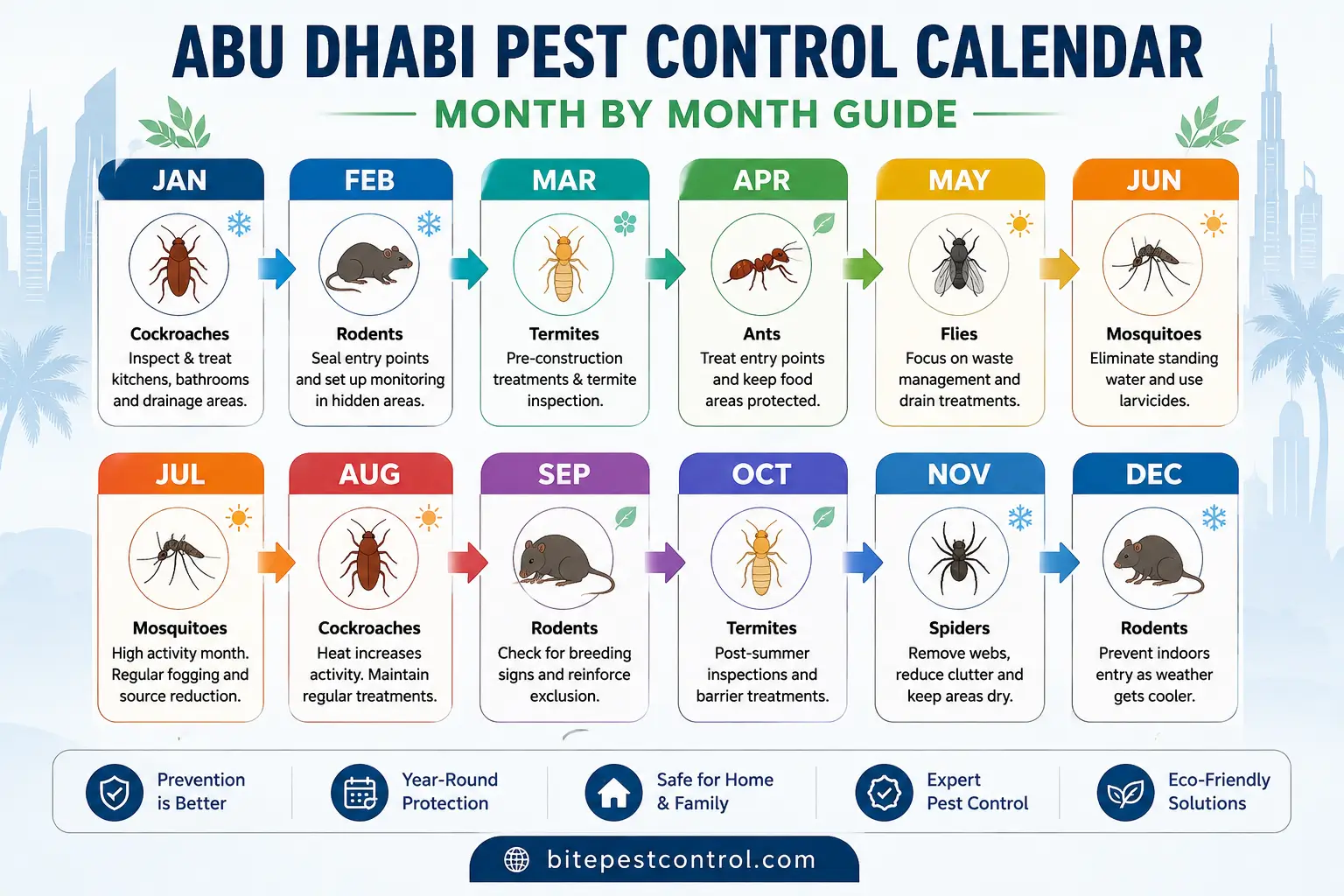
This calendar is a practical framework based on general seasonal patterns in Abu Dhabi, not a fixed scientific schedule. Actual pest activity depends on your specific property, surrounding environment, and pest history.
At a broader level, the year breaks into a few seasonal phases:
- January-February: cooler period, indoor pests and rodents may remain active as they seek shelter
- March-April: rising temperatures, a useful window for pre-summer prevention
- May-September: sustained heat, generally higher pressure from cockroaches, ants, and mosquitoes
- October-November: transitional period and a useful second prevention window
- December: cooler period, continued indoor pest monitoring
The month-by-month breakdown below adds more detail within those phases, but treat the exact month-to-month differences as general tendencies rather than fixed patterns.
| Month | Likely Pest Activity | Common Pests | Recommended Action |
|---|---|---|---|
| January | Lower outdoor activity, indoor shelter-seeking | Rodents, indoor pests | Inspect entry points, address any indoor sightings |
| February | Activity starts picking up | Rodents, cockroaches, early ants | Good time for a general inspection |
| March | Rising activity as temperatures increase | Ants, termites, wasps | Preventive treatment window opens |
| April | Pre-summer buildup | Ants, termites, mosquitoes | Strong window for preventive treatment |
| May | Heat increases pest pressure | Cockroaches, ants, mosquitoes | Follow-up treatment if not done in March/April |
| June | High indoor and outdoor activity | Cockroaches, ants, mosquitoes | Monitor and treat as needed |
| July | Peak heat, indoor shelter-seeking | Cockroaches, mosquitoes | Address any active infestations promptly |
| August | Sustained high activity | Cockroaches, mosquitoes, flying insects | Continue monitoring, especially kitchens and drainage |
| September | Activity begins to shift | Mosquitoes, flying insects | Good time to assess summer damage or entry points |
| October | Transitional period | Mosquitoes, rodents, indoor pests | Second preventive window, deeper treatment possible |
| November | Cooling weather, shelter-seeking begins | Rodents, flies, cockroaches | Inspection and preventive treatment |
| December | Lower outdoor activity, indoor focus | Rodents, indoor pests | Check for indoor entry points before winter |
Properties with irrigation, gardens, poor drainage, or a history of infestation may see activity outside these general patterns. Commercial kitchens and food storage areas in particular can have pest pressure year-round regardless of season.
Also Read > Benefits of Annual Maintenance Contracts (AMC) for Pest Control
Best Time to Treat Different Pests
Cockroaches
Cockroach activity in Abu Dhabi tends to increase as heat and humidity rise, typically from late spring through summer, though they remain a concern indoors year-round once established. Treating before peak summer heat, ideally in March or April, can reduce how much cockroach activity builds up over the hottest months. If cockroaches are already appearing regularly, that’s a sign to book an inspection now.
Ants
Ants generally become more active as temperatures warm, searching for food and water sources both outdoors and indoors. Kitchens, pantries, and areas near water sources are common entry points. Warmer months increase this activity, but ants can also move indoors during any season if food is left accessible or if outdoor conditions become too dry or too wet for their colonies.
Mosquitoes
Mosquito activity in Abu Dhabi is strongly influenced by temperature and available breeding water. Irrigation systems, garden features, poorly draining planters, and even small amounts of water collecting after cleaning can support mosquito breeding. Properties with irrigation, gardens, pools, or poor drainage can see mosquito problems during periods of higher mosquito activity, which generally coincides with warmer weather. Villas with gardens or pools generally need more attention here than apartments.
Termites
Termites are a year-round concern in Abu Dhabi, not a pest tied to one specific month. Some termite species swarm during particular periods, which can make activity more visible at certain times of year, but the absence of a visible swarm doesn’t mean a property is termite-free. Early detection matters more than timing here. Signs like mud tubes, damaged wood, or discarded wings should prompt an inspection regardless of season, since termite damage can progress quietly for a long time before it becomes obvious.
Rodents
Rodents often become more noticeable when they’re looking for shelter, food, and stable temperatures, which can happen during cooler months as well as hot ones. Indoor environments offer consistent shelter year-round, so rodent problems aren’t limited to a specific season. Any sighting, droppings, or gnaw marks are worth acting on quickly.
Bed Bugs
Bed bugs don’t follow a seasonal pattern that makes waiting worthwhile. They travel through luggage, furniture, and shared walls, and an infestation can start at any time of year. If there are signs of bed bugs, bites, small blood spots on bedding, or visible insects, treatment should happen as soon as possible rather than being scheduled around a season.
Wasps and Flying Insects
Wasps and other flying insects tend to be more active during warmer months, particularly when nesting activity increases in spring and continues through summer. Nests near balconies, eaves, or outdoor seating areas are a common issue for villas and ground-floor units. If a nest is found, it’s worth having it assessed and removed rather than waiting for it to become larger.
Best Time for Pest Control in Apartments vs Villas
Property type changes what pests are likely and how urgent timing becomes.
Apartments deal with pest pressure that often comes from shared building systems rather than the unit itself. Shared walls, service shafts, and building-wide drainage mean a pest problem in one unit can easily spread to neighboring units. Cockroaches and ants are common because they can travel through small gaps around pipes and shafts. Bed bugs are also more of a concern in apartments due to shared corridors, elevators, and furniture moved between units. Because of this, apartment pest control often benefits from coordination with building management, and timing may depend more on what’s happening elsewhere in the building than on the calendar.
Villas face different pressure, largely tied to outdoor space. Gardens, irrigation systems, and outdoor seating areas create conditions that support mosquitoes and ants. Villas can have additional termite exposure, since gardens, soil contact, landscaping, and outdoor wooden structures create more areas that may need inspection. Rodents can also enter through gaps in garden walls, garages, or utility areas. Villa owners generally have more control over prevention, since garden maintenance, drainage, and sealing entry points are all within the property boundary.
Commercial properties, including restaurants, hotels, warehouses, and offices, need scheduling built around business operations rather than season alone. Food storage and preparation areas, waste disposal points, and loading docks can attract pests regardless of time of year, and treatment often needs to happen outside business hours to avoid disrupting operations. Businesses that handle food or operate in regulated categories should also check what pest management standards apply to their specific license type, since requirements can vary by business category.
Should You Schedule Pest Control Before Summer?
For many residential properties in Abu Dhabi, pre-summer treatment is a sensible preventive step. As temperatures rise, several common pests, including ants, cockroaches, and mosquitoes, tend to increase in activity, and treating before that increase gives protective measures time to work before pest pressure peaks.
Commercial properties may need a different schedule based on the type of business, pest risk, operating conditions, and any applicable standards for their license category. A restaurant kitchen and a warehouse, for example, don’t face the same pest pressure or the same rules around when treatment needs to happen.
This doesn’t mean every pest becomes active at exactly the same point in the year. Termites remain a concern year-round, rodents can be an issue in any season, and bed bugs aren’t tied to weather at all. Pre-summer treatment is most useful as a general preventive measure, not a complete pest control solution on its own.
Is Winter a Good Time for Pest Control in Abu Dhabi?
Winter and the cooler months are still a useful time for pest control in Abu Dhabi, even though outdoor insect activity generally slows down. Cooler weather can push rodents and some insects to seek shelter indoors, where conditions stay warm and stable. Cockroaches, in particular, can remain active indoors during winter months if kitchens and bathrooms provide consistent warmth and moisture.
Winter also works well for inspection and preventive treatment. With lower outdoor pest pressure, it’s often easier to identify entry points, seal gaps, and address any issues from the previous summer before the cycle starts again. Treating in November or December can set a property up well for the following spring.
How Often Should You Schedule Pest Control?
There’s no single frequency that works for every property in Abu Dhabi. How often pest control makes sense depends on several factors:
- The type of pest and how quickly it can re-establish
- Whether there’s an active infestation or just preventive maintenance in place
- Property type, since villas, apartments, and commercial spaces have different exposure
- Location, including proximity to construction sites, waste areas, or vegetation
- Previous infestation history at the property
- How much food and waste exposure the property has
- Landscaping, irrigation, and drainage conditions
- Recommendations from a pest control professional based on an on-site inspection
A property with no history of infestation, good drainage, and sealed food storage will generally need less frequent preventive service than a restaurant, a property with recurring cockroach or rodent issues, or a villa with a termite history. The right frequency comes from an actual inspection of the property and a professional’s recommendation, not a generic rule applied to every home or business.
It’s worth separating two different things here. Preventive maintenance is about reducing the chance of a problem before it starts. Treatment for an active infestation is a different process entirely, focused on eliminating a pest that’s already present, and it should happen as soon as the infestation is confirmed rather than on a preventive schedule.
When Should You Call Pest Control Immediately?
Certain signs mean it’s time to call pest control right away, regardless of season:
- Repeated cockroach sightings, especially during the day
- Rodent sightings, droppings, or gnaw marks
- Termite swarmers, discarded wings, or mud tubes
- Bites, blood spots, or other signs of bed bugs
- A visible wasp nest near entrances or outdoor living areas
- Mosquito activity that increases rapidly, particularly near standing water
- Pest problems that return after DIY treatment
Any of these situations calls for evidence-based action, since cockroaches, rodents, and bed bugs in particular can multiply quickly once established.
How to Choose the Right Pest Control Timing for Your Property
A simple way to think through timing is to work through these questions in order:
- Are pests already present? If yes, timing should be based on the evidence, not the season.
- What type of pest is involved? Some, like termites and bed bugs, need attention regardless of month. Others, like ants and mosquitoes, follow more seasonal patterns.
- What type of property is it? Villas, apartments, and commercial spaces each carry different pest risks and different scheduling needs.
- What time of year is it? If there’s no active infestation, March-April or October-November are reasonable preventive windows.
- Has the property had pest problems before? A history of infestation usually means more frequent or more targeted treatment is worthwhile.
- What are the current environmental conditions? Recent construction nearby, drainage issues, or garden changes can all shift the right timing.
Working through these points gives a clearer answer than trying to apply one seasonal rule to every situation.
What to Do Before Scheduling Pest Control
A few preparation steps can make any treatment, preventive or otherwise, more effective:
- Note where pests have been seen and how often
- Fix obvious leaks or drainage issues around the property
- Remove standing water from planters, drains, or garden features
- Store food in sealed containers and clear crumbs or spills promptly
- Avoid heavy use of DIY pesticides right before a professional visit, since some products can interfere with treatment
- Ask the provider what preparation they recommend for your specific property and pest issue
This kind of preparation applies whether you’re booking a routine preventive visit or responding to an active infestation.
FAQs
What is the best month for pest control in Abu Dhabi?
March and April are generally useful for preventive treatment before summer heat increases pest activity. October and November are also good for a second preventive round or deeper treatment. The right choice depends on the pest and the property.
Is pest control necessary before summer in Abu Dhabi?
For many residential properties, yes. Treating in March or April can reduce pest pressure before ants, cockroaches, and mosquitoes become more active in the heat. Commercial properties should base timing on their specific pest risk and operating requirements.
Is winter a good time for pest control in Abu Dhabi?
Yes. While outdoor activity slows, winter is a good time for inspection and preventive treatment, and some pests like rodents and cockroaches can remain active indoors.
How often should pest control be done in Abu Dhabi?
It depends on the property, pest history, and current conditions. Properties with a clean record and good maintenance generally need less frequent service than those with recurring issues. An inspection is the best way to determine the right schedule.
When are cockroaches most active in Abu Dhabi?
Cockroach activity tends to rise with heat and humidity, generally from late spring through summer, though they can remain active indoors year-round.
When is the best time to treat mosquitoes?
Mosquito activity increases in warmer months and is closely tied to standing water. Properties with irrigation or gardens should address water sources regardless of season.
Should I get pest control before moving into a new home in Abu Dhabi?
It’s a reasonable precaution, especially for villas with gardens or properties with a known pest history. An inspection before move-in can catch issues like termite damage or rodent entry points before they become harder to address.